

2013-11-01 16:28:15
2021-02-08 13:36:07
| Jump to: | Part 1 | Part 2 | Part 3 | Part 4 |
Part I: What is a Herb/ Nutrient- Drug Interaction?
Currently, there exists much information, as well as mis-information, about interactions between certain herbs & nutrients and drugs. Some of the most common questions we receive as naturopathic doctors (ND) pertain to this area. This is a very complex area, and we certainly encourage you to consult with a trained healthcare provider such as an ND if you are on any medications. However, there are a handful of well characterized interactions between common drugs and certain natural health products (NHPs) that the safety-conscious consumer should be aware of. In this article we will discuss relevant evidence on interactions of herbs or nutrients with the drugs metformin, antidepressants, and warfarin.
Interactions between nutrients, herbs, and drugs can occur in many ways. For the purposes of this article, we will discuss three types: first, a drug can deplete levels of a certain nutrient. This can happen through increased nutrient utilization or through impaired nutrient absorption. Secondly, herbs can have effects that are similar to, or additive with, that of a drug. For instance, in someone taking medication for sleep, taking an herb that also sedates the central nervous system could result in over-sedation. Finally, an herb or nutrient can change the way that the body metabolizes a drug.(3) These are also known as pharmacokinetic interactions. For instance, some drugs need to be activated in the body before they can have their effects. If an herb increases enzymes responsible for this activation, it could increase blood levels of this drug, thereby increasing its effects. Conversely, if an herb increases enzymes responsible for the breakdown and elimination of the drug, it could result in lower levels in the blood, and decreased effectiveness.(4)
In general, if a drug affects the digestive system, such as acid inhibiting medications, it may have the potential to alter nutrient absorption. Similarly, if an herb or nutrient impacts the liver or kidneys, the primary organs of drug metabolism and elimination, it could have the potential to increase or decrease blood levels of the drug. This could result in decreased effectiveness or increased side effects. Finally, if the herb or nutrient is targeting the same organ or bodily function as a drug, there may be a possibility of additive effects. Although there are many natural agents that are very safe, it is important to be aware of those that may not be, and to seek professional advice if unsure. Conversely, supplementation may be of higher importance in persons taking medications known to deplete certain nutrients. Each of the three interactions we will describe exemplifies a different type of interaction. Stay tuned for Part II, which will discuss the interaction between metformin and vitamin B12.
Références
1. Long AN, Atwell CL, Yoo W, Solomon SS. Vitamin B(12) deficiency associated with concomitant metformin and proton pump inhibitor use. Diabetes Care. 2012;35(12):e84.
2. Abourashed EA, Koetter U, Brattström A. In vitro binding experiments with a Valerian, hops and their fixed combination extract (Ze91019) to selected central nervous system receptors. Phytomedicine. 2004;11(7-8):633-8.
3. Hermann R, von Richter O. Clinical evidence of herbal drugs as perpetrators of pharmacokinetic drug interactions. Planta Med. 2012;78(13):1458-77.
4. Kennedy DA, Seely D. Clinically based evidence of drug-herb interactions: a systematic review. Expert Opin Drug Saf. 2010;9(1):79-124.
Three important interactions – What you should know about herbs, drugs, and nutrients
Part II: Metformin and Vitamin B12
In Part I we defined some common types of interactions that can occur between drugs and natural health products (NHPs). In this section, we describe a drug-nutrient interaction between metformin and vitamin B12. Metformin is one of the most commonly prescribed oral medications for type II diabetes as well as for polycystic ovary syndrome (PCOS). What is lesser known is that metformin has been shown to deplete vitamin B12 levels.(1,2,3)

Studies have repeatedly shown that patients with diabetes who are taking metformin have lower levels of vitamin B12 compared to diabetics who are not taking metformin.(1,2) One study found that of over 100 patients taking approximately 1800mg per day, the patients treated with metformin had an average B12 level of 393.5 pg/mL compared to 509 pg/mL in patients not taking metformin.(2) Another study found that taking metformin 850mg over 4 years resulted in a 19% decrease in vitamin B12 levels compared to patients taking placebo.(4) This is an important impact because vitamin B12 is needed to metabolize a substance called homocysteine. Elevated homocysteine is associated with increased risk of heart disease and stroke, and this is especially relevant because patients with diabetes are already at increased risk of heart disease. The National Health and Nutrition Examination Survey (NHANES), conducted as a representative survey of the American population, found that diabetic patients taking metformin had an almost 3-fold higher risk of being vitamin B12 deficient compared to diabetics not taking metformin.(5) Recently, vitamin B12 made its way into the mainstream media following a study by Dr. Elaine Moore showing that patients on metformin are at higher risk of cognitive impairment.(6) In an interview with Medscape Medical News, Dr. Moore suggested that up to 30% of patients taking metformin may have suboptimal levels of vitamin B12 (6) Correction of this problem may help offset the risk of cognitive impairment, since vitamin B12 is very important in normal brain and nerve function.(7) Metformin appears to inhibit uptake of vitamin B12 by interfering with the receptor responsible for absorption in the terminal end of the small intestine, called the ileum.(7) Dr. Moore suggests that patients taking metformin should have their vitamin B12 levels checked on an annual basis, and appropriate supplementation undertaken to correct deficiency.(7) Importantly, Dr. Moore recommends aiming for blood levels that are not simply “adequate” (ie., not deficient), but for levels that are “good” or considerably higher; she uses a cut off of at least 300 pg/mL.(7) You can be proactive by asking your family doctor or naturopathic doctor to measure your vitamin B12 levels on a regular basis. Stay tuned for Part III, in which we discuss interactions related to antidepressants.
Références
1. Kos E, Liszek MJ, Emanuele MA, Durazo-Arvizu R, Camacho P. Effect of metformin therapy on vitamin D and vitamin B levels in patients with type 2 diabetes mellitus. Endocr Pract. 2012;18(2):179-84.
2. Calvo Romero JM, Ramiro Lozano JM. Vitamin B(12) in type 2 diabetic patients treated with metformin. Endocrinol Nutr. 2012;59(8):487-90.
3. Mazokopakis EE, Starakis IK. Recommendations for diagnosis and management of metformin-induced vitamin B12 (Cbl) deficiency. Diabetes Res Clin Pract. 2012;97(3):359-67.
4. de Jager J, Kooy A, Lehert P, Wulffelé MG, van der Kolk J, Bets D, et al. Long term treatment with metformin in patients with type 2 diabetes and risk of vitamin B-12 deficiency: randomised placebo controlled trial. BMJ. 2010;340:c2181.
5. Reinstatler L, Qi YP, Williamson RS, Garn JV, Oakley GP Jr. Association of biochemical B deficiency with metformin therapy and vitamin B supplements: the National Health and Nutrition Examination Survey, 1999-2006. Diabetes Care. 2012;35(2):327-33.
6. Moore EM, Mander AG, Ames D, Kotowicz MA, Carne RP, Brodaty H, et al; AIBL Investigators. Increased risk of cognitive impairment in patients with diabetes is associated with metformin. Diabetes Care. 2013;36(10):2981-7.
7. Tucker M. Diabetes Drug Metformin May Impair Cognition, Study Finds. Medscape Medical News. September 24, 2013. URL: http://www.medscape.com/viewarticle/811546
Three important interactions – What you should know about herbs, drugs, and nutrients
Part III: St. John’s Wort and Antidepressants
In Part II we illustrated a drug-nutrient interaction between metformin and vitamin B12. This was a very well characterized interaction. We now focus on an herb-drug interaction, this time between St. John’s wort and the class of antidepressants known as selective serotonin reuptake inhibitors (SSRIs). This class included drugs like citalopram, paroxetine, and fluoxetine. St John’s wort may increase the action of SSRI’s leading to a complication called serotonin syndrome.
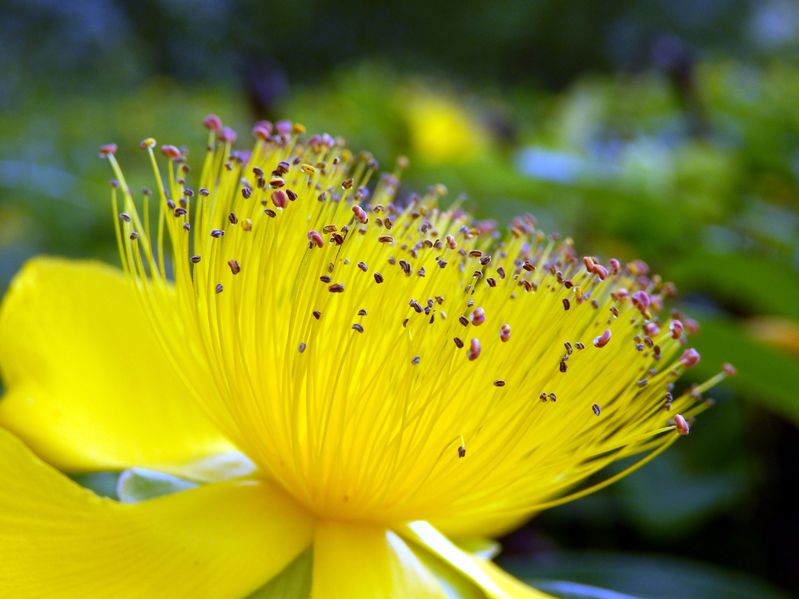
As the name suggests, SSRIs act by increasing levels of the neurotransmitter, serotonin, inside brain cells (neurons). St. John’s work is recognized as a highly effective herb for treating depression,(1) and it is thought to act in part through parallel effects on serotonin.(2,3) It is thought that combined use of these medications with St. John’s wort may result in excessive amounts of serotonin, which can be acutely dangerous. According to the Mayo Clinic, serotonin syndrome includes agitation or restlessness, confusion, rapid heart rate and high blood pressure, dilated pupils, loss of muscle coordination or twitching muscles, heavy sweating, diarrhea, headache, and shivering.(4) In severe cases, it can lead to a high fever, seizures, and irregular heartbeat.(4) There have been documented cases of serotonin syndrome in individuals using SSRIs in combination with other drugs affecting serotonin as well as St. John’s wort.(2,5) There may be some instances where use of St John’s wort may be indicated, such as in patients weaning off antidepressants, however this should never be undertake unless under the advice and supervision of a healthcare provider. In addition to antidepressants, St. John’s wort is known to interact with several other medications, including cyclosporine, a drug used in organ transplant patients; digoxin, a drug used for patients with heart disease; and warfarin, a commonly used blood thinner.(2,6) It is thought that St. John’s wort alters enzymes responsible for drug clearance, decreasing the effectiveness of these medications.(2) St. John’s wort remains a very important natural medicine when used appropriately. Patients on medication should consult with a naturopathic doctor to assess whether it may be appropriate for them. Stay tuned for Part IV of this series, examining the interaction between a common food & herbal medicine and warfarin.
Références
1. Linde K, Berner MM, Kriston L. St John’s wort for major depression. Cochrane Database Syst Rev. 2008 Oct 8;(4):CD000448.
2. Russo E, Scicchitano F, Whalley BJ, Mazzitello C, Ciriaco M, Esposito S, et al. Hypericum perforatum: Pharmacokinetic, Mechanism of Action, Tolerability, and Clinical Drug-Drug Interactions. Phytother Res. 2013 Jul 30.
3. Zhou SF, Lai X. An update on clinical drug interactions with the herbal antidepressant St. John’s wort. Curr Drug Metab. 2008;9(5):394-409.
4. Mayo clinic. Serotonin syndrome. Updated Feb 8, 2011. URL: http://www.mayoclinic.com/health/serotonin-syndrome/DS00860/DSECTION=symptoms Accessed 17 October 2013.
5. Bonetto N, Santelli L, Battistin L, Cagnin A. Serotonin syndrome and rhabdomyolysis induced by concomitant use of triptans, fluoxetine and hypericum. Cephalalgia. 2007;27(12):1421-3.
6. Borrelli F, Izzo AA. Herb-drug interactions with St John’s wort (Hypericum perforatum): an update on clinical observations. AAPS J. 2009;11(4):710-27.
Three important interactions – What you should know about herbs, drugs, and nutrients
Part IV: Warfarin and Cranberry
In preceding sections we discussed interactions involving nutrient depletion (vitamin B12) as well as additive combinations (St. John’s wort). In this section, we describe a potential interaction between a common food and herb, cranberry, and warfarin, a commonly prescribed blood thinner.
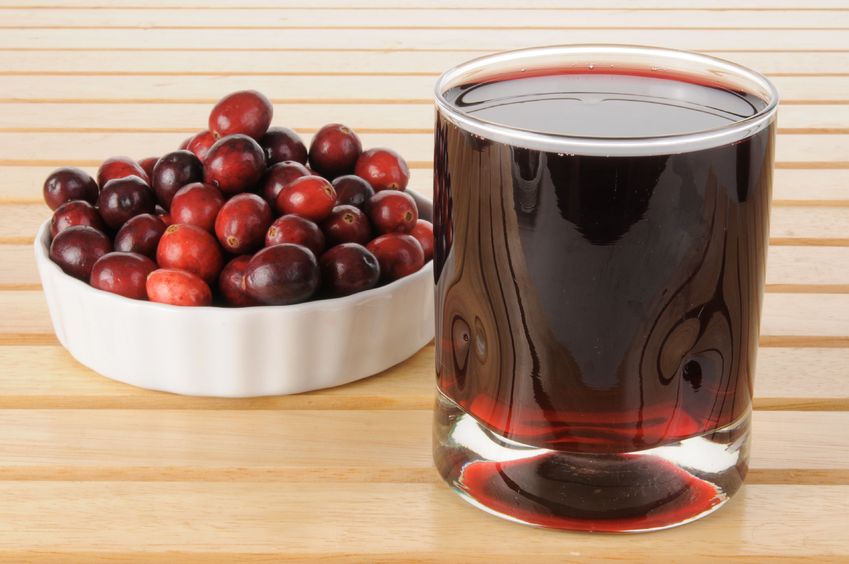
Of prime importance when considering this drug is recognizing the fact that the range of target blood levels for warfarin is very narrow. We call this a very narrow therapeutic range. This means that if blood levels fall too low, the drug will not be effective; however, if blood levels become even a little bit too high, there is risk of serious side effects. Since warfarin is a blood thinner, the risk is that blood clotting time may become too short – predisposing to clot formation and possible heart attack – or that blood clotting time may become too long – resulting in risk of bleeding and hemorrhage. Cranberry juice is a food as well as an herbal medicine most commonly used for treatment and prevention of urinary tract infections. As a food, it is a seemingly innocuous substance, however its effect on warfarin parameters is controversial.(1) Indeed, while the majority of studies show little effects on warfarin levels from consumption of 1 cup cranberry juice, a small number of studies suggest that cranberry could decrease warfarin metabolism, resulting in elevated blood levels and subsequent risk of bleeding.(2,3,4) Three human trials have reported that consumption of 240mL cranberry juice per day for up to two weeks failed to affect blood clotting time called INR, or warfarin blood levels.(5,6,7) However, one study found that consumption of cranberry juice for two weeks increased a measure of INR (clotting time) by up to 30% after a single dose of warfarin (8). In this study, it appeared that the effect was greater in men with a certain genetic variation, suggesting that this may play a role in determining who might be susceptible to this type of interaction.
In conclusion, although cranberry juice or extract is extremely useful for fighting urinary tract infections, individuals who are on warfarin should be cautious about using it. At present the evidence is not clear, but it is possible that some may be more likely to have increased bleeding time from combining cranberry and warfarin. Consult with your healthcare provider if you are unsure about the appropriateness of using any natural health product.
Références
1. Srinivas NR. Cranberry juice ingestion and clinical drug-drug interaction potentials; review of case studies and perspectives. J Pharm Pharm Sci. 2013;16(2):289-303.
2. Haber SL, Cauthon KA, Raney EC. Cranberry and warfarin interaction: a case report and review of the literature. Consult Pharm. 2012;27(1):58-65.
3. Hamann GL, Campbell JD, George CM. Warfarin-cranberry juice interaction. Ann Pharmacother. 2011;45(3):e17.
4. Roberts D, Flanagan P. Case report: Cranberry juice and warfarin. Home Healthc Nurse. 2011;29(2):92-7.
5. Ansell J, McDonough M, Zhao Y, Harmatz JS, Greenblatt DJ. The absence of an interaction between warfarin and cranberry juice: a randomized, double-blind trial. J Clin Pharmacol. 2009;49(7):824-30.
6. Lilja JJ, Backman JT, Neuvonen PJ. Effects of daily ingestion of cranberry juice on the pharmacokinetics of warfarin, tizanidine, and midazolam–probes of CYP2C9, CYP1A2, and CYP3A4. Clin Pharmacol Ther. 2007;81(6):833-9.
7. Li Z, Seeram NP, Carpenter CL, Thames G, Minutti C, Bowerman S. Cranberry does not affect prothrombin time in male subjects on warfarin. J Am Diet Assoc. 2006;106(12):2057-61.
8. Mohammed Abdul MI, Jiang X, Williams KM, Day RO, Roufogalis BD, Liauw WS, et al. Pharmacodynamic interaction of warfarin with cranberry but not with garlic in healthy subjects. Br J Pharmacol. 2008;154(8):1691-700.