

2017-10-04 12:13:41
2021-01-06 08:16:26
www.annehussain.com/
Lavender Oil and Its Properties
Lavender oil is extracted via steam distillation of its flowering tops for topical application; however, in aromatherapy, the whole plant is used. The oil can be used in a variety of ways: ingested orally, inhaled, used topically on the skin directly, used in aromatherapy blends, in baths, and more. Even when applied topically, lavender oil can enter the bloodstream, and studies have shown its constituents and metabolites in the serum of tested individuals.[5] Lavender’s primary effects include anxiolytic, antimicrobial, analgesic, antidepressant, calming, and cooling.
Lavender Species and Constituents 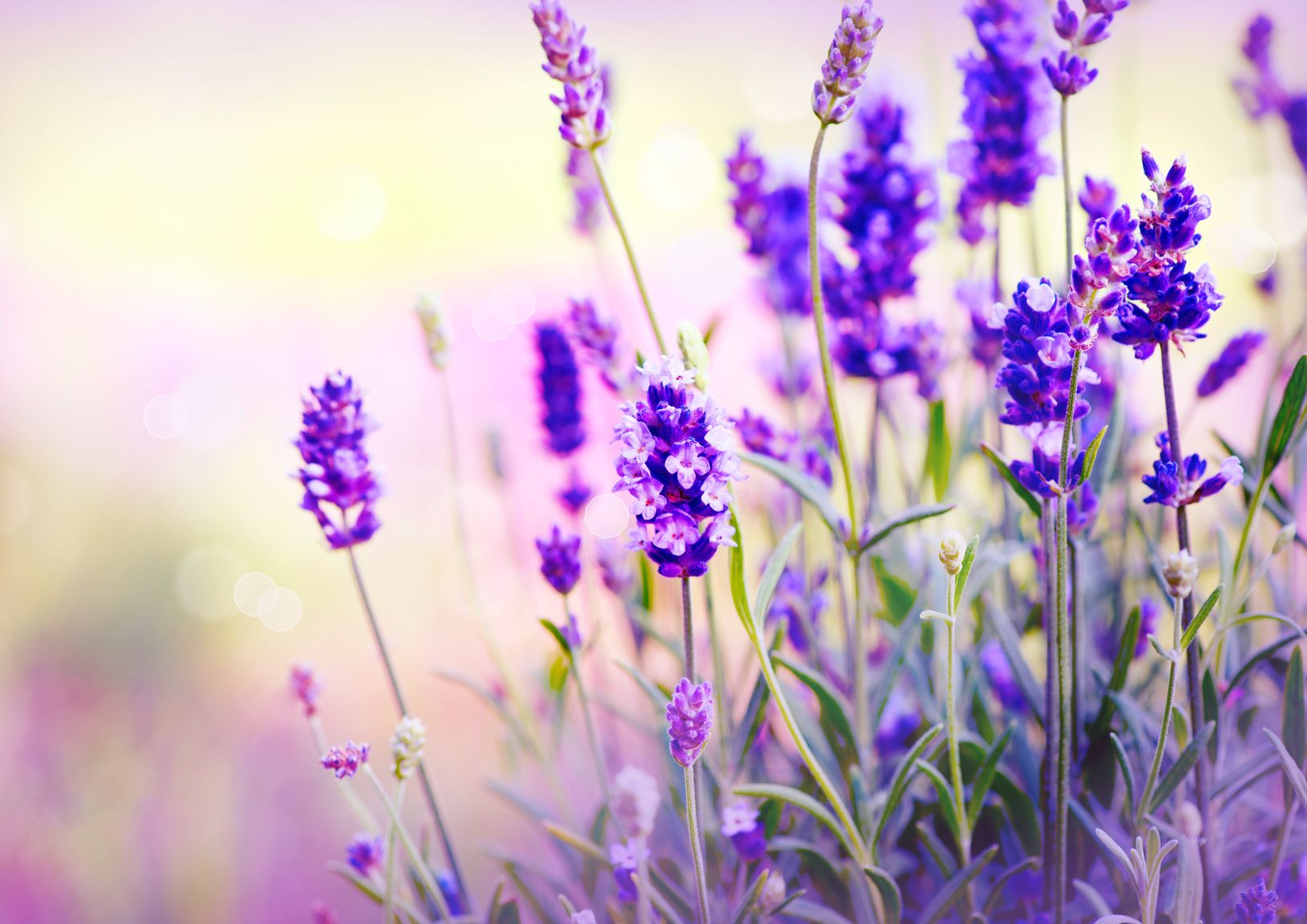
When we think of lavender, small purple flowers with frosty leaves come in mind. Lavender can actually refer to a few different species of the genus Lavandula, mainly L. angustifolia, L. stoechas, L. latifolia, and L. intermedia, and they all look slightly different and have different constituent profiles.[1] For skin ailments, the species of lavender used is L. angustifolia. The main active compounds in lavender include linalool, linalyl acetate, lavandulol, eucalyptol, α-pinene, 1,8‑cineole, lavandulyl acetate, and camphor.[1] These constituents—especially linalool, which is found in the highest percentage of the above-listed compounds—play an important role in lavender’s therapeutic effects. Linalool has actually been shown to have antidepressant effects as well as calming effects by working on the nervous system’s GABA receptors.[2] It also has antibacterial and analgesic properties, which makes lavender a great addition to topicals for wound care and pain management.[3] In addition, new research in mice has implicated linalool in improved cognition and decrease in progression of Alzheimer’s dementia.[4]
Lavender Uses
Cuts and Scrapes
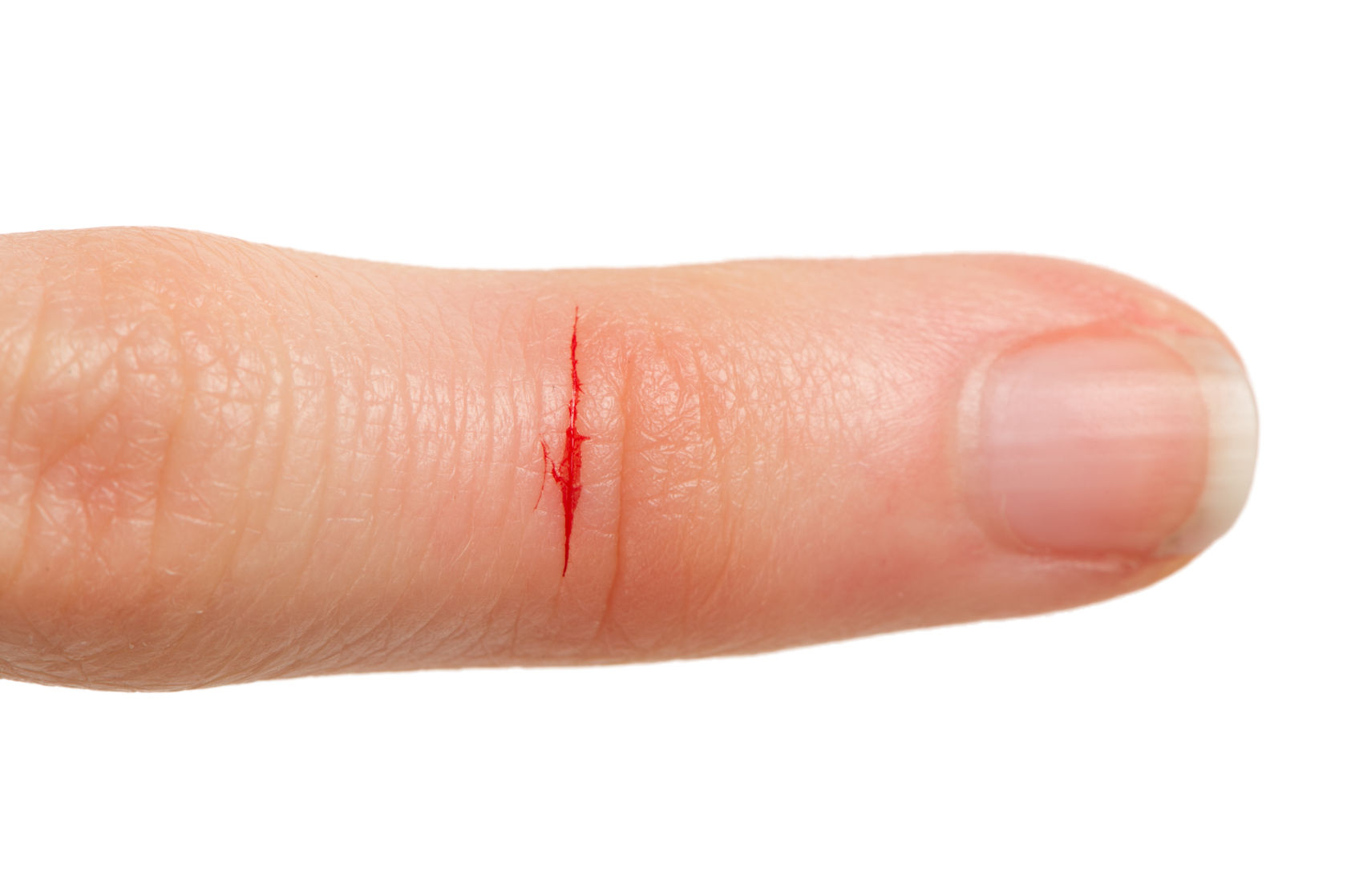 Due to its antibacterial properties and the ability to stimulate collagen, lavender works wonderfully in conjunction with other topicals to help heal cuts and scrapes. In animal studies, topical lavender oil has been shown increase collagen production and decrease wound size over the span of seven days versus a control solution.[6] It can even be mixed in with a honey ointment or Polysporin ointment for a synergistic effect. In fact, it has been shown that L. angustifolia oil acts synergistically in wound healing with conventional agents such as nystatin, chloramphenicol, ciprofloxacin, and fusidin against microbes and fungi such as Pseudomonas aeruginosa, Staphylococcus aureus, and Candida albicans.[7]
Stress and Anxiety 
Lavender is a very soothing herb that relaxes the nervous system and decreases cortisol— stress hormone—levels in the body.[8] It is usually found in combination with other herbs like chamomile, oatstraw, and lemonbalm in calming teas, tinctures, and supplements. Its essential oil can be used in a bath, in a diffuser, in personal-care products, and/or in a hair oil to help calm you down. Even when simply inhaled, lavender essential oil has been shown to decrease blood pressure, heart rate, and skin temperature when compared to a base oil without lavender essential oil.[9] An oral preparation of lavender has been shown to be as effective as 0.5 mg of a common benzodiazepine called lorazepam for general anxiety disorder.[10] Even in babies, inhalation of lavender oil has been associated with decreased stress and crying during bath time.[11]
Insomnia 
Another use for lavender is as a sleep aid. It has been shown to improve the quality of sleep in a variety of different patient populations—university students, menopausal women, and geriatric patients—and has been shown to improve sleep duration in patients who have decreased sleep duration due to benzodiazepine withdrawal.[12][13] It is a constituent of many sleepy-time teas, tinctures, and supplements alongside chamomile, lemonbalm, catnip, valerian, and passionflower. Aside from ingesting lavender in the above-mentioned forms, lavender essential oil can be massaged into the scalp (mixed in with a carrier oil), used in a diffuser, and/or applied to a pillow or sleep-mask.
Pain Relief
Perineal discomfort after childbirth and C‑section scar pain have been shown to be decreased with topical applications of lavender, in the form of sitz baths for the former and massage with lavender-infused oil for the latter.[14] Lavender has been shown to help decrease the intensity of migraine headaches when inhaled during the headache’s early stages for 15 minutes.[15] It has also been shown to decrease the pain of needle insertion in hospital settings—the oxygen face-masks were coated with lavender prior to administration.[16]

Lavender can also be used to alleviate sore, achy neck and back pain.[17] It combines well with other essential oils such as wintergreen, peppermint, and/or copaiba. Clinical experience has shown that a good way to use lavender in this case would be to combine 3 tbsp. of castor oil with two drops each of the essential oils of lavender, peppermint, wintergreen, and/or copaiba, and massage into achy traps, back muscles, or calves for relief.
Other Uses
Lavender has some promising uses in mucosal healing in gastrointestinal damage such as ulcers, as an anticonvulsive for epilepsy, helping those suffering from PTSD, and in improving cognitive defects due to Alzheimer’s dementia.[18][19][20][21]
Safety
Lavender oil is relatively safe for all ages and is not addictive. In adults, lavender essential oil can even be used undiluted for topical application, but not for infants or children. When ingesting lavender oil, it is advisable to only use food-grade, and in a diluted form or in an encapsulated form that has shown to be safe. Lavender, alongside tea tree oil, can have some estrogenic and antiandrogenic effects according to in vitro studies.[22] There has also been a small case study showing gynecomastia in young males using topical herbal blends of lavender, which resolved with discontinuation of the herbal blend.[22] Lavender should not be ingested during pregnancy, and used with caution during breast-feeding. People with allergies to lavender should avoid lavender; common symptoms of an adverse effect to oral administration of lavender include stomach upset and nausea.[10] Most research regarding application and ingestion of lavender have been short-term, so the long-term effects are unclear.
Conclusion
Lavender is a very safe and versatile herb; its healing properties have been utilized all around the world and the medical research world is finally catching up to corroborating many of its traditional and historical uses. Its essential oil has antimicrobial, calming, cooling, and hormone-balancing effects, and is safe enough to be used directly onto the skin without dilution (for adults). From minor cuts to managing anxiety, it’s definitely one to keep around the house.
Références
- Koulivand, P.H., M.K. Ghadiri, and A. Gorji. “Lavender and the nervous system.” Evidence-Based Complementary and Alternative Medicine. Vol. 2013 (2013): 681304.
- Guzmán-Gutiérrez, S.L., et al. “Linalool and β‑pinene exert their antidepressant-like activity through the monoaminergic pathway.” Life Sciences. Vol. 128 (2005): 24–29.
- Lyu, Y., et al. “Using oxidized amylose as carrier of linalool for the development of antibacterial wound dressing.” Carbohydrate Polymers. Vol. 174 (2017): 1095–1105.
- Xu, P., et al. “Protective effects of linalool against amyloid beta-induced cognitive deficits and damages in mice.” Life Sciences. Vol. 174 (2017): 21–27.
- Jager, W., et al. “Percutaneous absorption of lavender oil from a massage oil.” Journal of the Society of Cosmetic Chemists. Vol. 43, No. 1 (1992): 49–54.
- Hiroko-Miyuki, M., et al. “Wound healing potential of lavender oil by acceleration of granulation and wound contraction through induction of TGF‑β in a rat model.” BMC Complementary and Alternative Medicine. Vol. 16 (2016): 144.
- De Rapper, S., A. Viljoen, and S. van Vuuren. “The in vitro antimicrobial effects of Lavandula angustifolia essential oil in combination with conventional antimicrobial agents.” Evidence-Based Complementary and Alternative Medicine. Vol. 2016 (2016): 2752739.
- Hosseini, S., et al. “Effect of lavender essence inhalation on the level of anxiety and blood cortisol in candidates for open-heart surgery.” Iranian Journal of Nursing and Midwifery Research. Vol. 21, No. 4 (2016): 397–401.
- Sayorwan, W., et al. “The effects of lavender oil inhalation on emotional states, autonomic nervous system, and brain electrical activity.” Journal of the Medical Association of Thailand. Vol. 95, No. 4 (2012): 598–606.
- Woelk, H., and S. Schlafke. “A multi-center, double-blind, randomised study of the lavender oil preparation Silexan in comparison to lorazepam for general anxiety disorder.” Phytomedicine. Vol. 17, No. 2 (2010): 94–99.
- Field, T., et al. “Lavender bath oil reduces stress and crying and enhances sleep in very young infants.” Early Human Development. Vol. 84, No. 6 (2008): 399–401.
- Chien, L.W., S.L. Cheng, and C.F. Liu. “The effect of lavender aroma therapy on autonomic nervous system in midlife women with insomnia.” Evidence-Based Complementary and Alternative Medicine. Vol. 2012 (2012): 740813.
- Hardy, M., M.D. Kirk-Smith, and D.D. Stretch. “Replacement of drug treatment for insomnia by ambient odour.” The Lancet. Vol. 346, No. 8976 (1995): 701.
- Vakilian, K., et al. “Healing advantages of lavender essential oil during episiotomy recovery: A clinical trial.” Complementary Therapies in Clinical Practice. Vol. 17, No. 1 (2011): 50–53.
- Sasannejad, P., et al. “Lavender essential oil in the treatment of migraine headaches: A placebo-controlled clinical trial.” European Neurology. Vol. 67, No. 5 (2015): 288–291.
- Kim, S., et al. “The effect of lavender oil on stress, bispectral index values, and needle insertion pain in volunteers.” Journal of Alternative and Complementary Medicine. Vol. 17, No. 9 (2011): 823–826.
- Yip, Y.B., and S.H.M. Tse. “An experimental study on the effectiveness of acupressure with aromatic lavender essential oil for sub-acute, nonspecific neck pain in Hong Kong.” Complementary Therapies in Clinical Practice. Vol. 12, No. 1 (2006): 18–26.
- Barocelli, E., et al. “Antinociceptive and gastroprotective effects of inhaled and orally administered Lavandula hybrid Reverchon ‘Grosso’ essential oil.” Life Sciences. Vol. 76, No. 2 (2004): 213–223.
- Gorji, A., and G.M. Khaleghi. “History of epilepsy in medieval Iranian medicine.” Neuroscience and Biobehavioral Reviews. Vol. 25, No. 5 (2001): 455–461.
- Uehleke, B., et al. “Phase II trial on the effects of Silexn in patients with neurasthenia, post-traumatic stress disorder or somatization disorder.” Phytomedicine. Vol. 19, No. 8–9 (2012): 665–671.
- Jimbo, D., et al. “Effect of aromatherapy on patients with Alzheimer’s disease.” Psychogeriatrics. Vol. 9, No. 4 (2009): 173–179.
- Henley, D.V., et al. “Prepubertal gynecomastia linked to lavender and tea tree oils.” The New England Journal of Medicine. Vol. 356, No. 5 (2007): 479–485.