

Essential oils (EOs) are specialized molecules derived from plants and located in distinct areas like reservoirs, glandular hairs, specialized cells, or the interstitial space of cells. They function as protection against bacteria and temperature variations.1 They are derived from all parts of the plant like the leaves, flowers, buds, shoots, stalks, fruit, and even resins. There are over 100 constituents or active compounds in every drop of pure EO; this is what makes a true EO so effective and potent. A true EO differs from a brokered EO in that the latter is a copied blend of about five to ten of the most important compounds in a pure EO, that are synthesized and blended in a carrier oil. Some companies will market them as fragrance, scent, or perfume, and many are disguised as pure EOs because the scents are so similar.

EOs are becoming popular due to increased scientific studies demonstrating certain levels of efficacy and safety, all the while giving a sense of wellbeing due to their aroma and organic, nonsynthetic nature. However, to make the best use of EOs, and to experience the best benefits, it is important to have a base understanding in what you are doing, and knowledge in the products you are using. Aromatherapists suggest that one drop of EO is equivalent to about 15 to 40 cups of medicinal tea, or 10 teaspoons of tincture, making them very potent.2 It is therefore imperative to well research the plant.
This is a basic starter on how to use EOs; however, with any challenges or advice on interactions and contraindications, or use, it is best to consult a health-care practitioner or aromatherapist.
NUMBER 1

The first important aspect to EOs is their route of administration. Unlike most remedies, EOs are best if not taken orally or internally! In fact, taking EOs orally can be very dangerous, as they can harm the mucous membranes of the stomach and impact the liver or how the liver functions, increasing toxicity. Therefore, it is contraindicated to use most EOs internally (this includes by mouth, vaginally, or rectally) unless followed by a health-care practitioner or an aromatherapist, who can provide guidance to use very specific EOs that can be taken orally (mixed with a carrier oil). EOs that can be taken internally without guidance, such as lavender or oregano, will have as directions of use on the label that they can be consumed internally. Therefore, always double-check the product label!
NUMBER 2
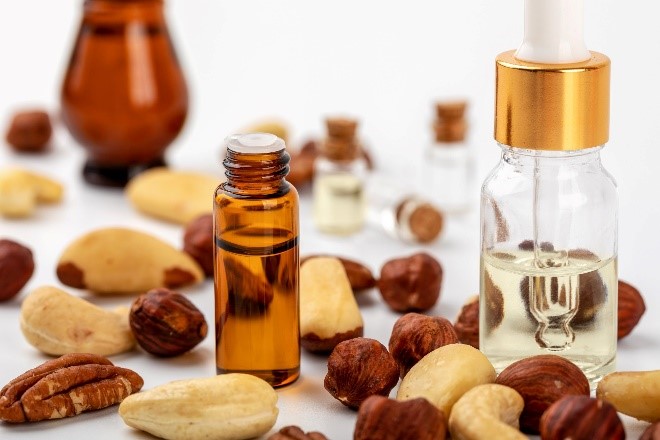
The second aspect to EOs is to know that EOs cross cellular membranes very easily.3 They are lipophilic (fat-loving) and can easily cross over into a cell and damage it. They will also carry over anything else that goes with it, which includes any solvents, pesticides, or phthalates.4 For this reason, when using EOs topically, it is suggested to use the dilution method with a clean and organic carrier oil. For the same reason, it is important to apply an EO mix with a carrier oil on a clean skin where pollutants have been washed away, to avoid them entering the body. Important to know is that EOs are not an emollient (even though they are called “oils”), and therefore, they do not hydrate or nourish the skin like vegetable oils but can have the opposite effect of drying and irritating if not properly blended. This process of emulsification is important if making a topical application or a vapour spray, since EOs will not blend in water and will remain on the surface or adhere to the edges.
Examples of carrier oils include jojoba oil, sweet almond oil, or MCT/fractionated coconut oil. The best dermal dilution to minimize irritation is said to be anywhere from 1 to 5%.
- A 1% dilution is 6 drops EO in 30 ml (2 tbsp. / 1 oz.) of carrier oil
- A 2%, 12 drops/oz.
- A 3%, 18 drops/oz.
- A 4%, 24 drops/oz.
- A 5%, 20 drops/oz.
Some EOs can be applied directly to the skin; this is called a “neat application.”5 However, it is suggested to use them in very small amounts, for a very short duration. EOs that are considered safe as neat application are tea tree, lavender, rose, eucalyptus, and chamomile. Before starting to use any EO topically, it is recommended to do a patch test, especially if there is skin sensitivity, since molecules in EOs can bind to proteins in the skin and elicit an allergic reaction.
NUMBER 3
The least invasive route to use EOs is by inhalation or air diffusion.6 This route of administration offers the least risk for interactions or reactions, and function via stimulation of the olfactory nerves and cells that sends signals to the hypothalamus or brain. EOs used in this way have been studied for stress, anxiety, sleep, depression, pain, nausea and vomiting, and cognitive health.
The inhalation method can be used with an aroma stick. These can be purchased or made, and they are a plastic or glass tube with a cotton wick inside and cap to seal.
- To use an aroma stick, put 15–20 drops total of the EO into the dispenser, and cap. Open and inhale as directed, 1 or 2 times per day, or every 2 to 3 h.
In one study in cancer patients, inhalation significantly improved nausea, anxiety, and sleep, and was found to be most effective when done every 2–3 h.7 The diffusion method uses water vapour to disperse the EO in the air. This is a very common method of using EO and has the greatest impact to improve sleep and mood. For example, results of a meta-analysis of 34 published studies revealed that lavender was the most studied and most effective EO at mediating sleep problems, via inhalation, especially sleep onset. Secondary outcomes of stress emotion, anxiety, and depression also showed significant improvement.
Like topical methods, diffusion requires dilution. The following chart outlines a 2 to 5% dilution in differing amounts of water:
- 2–5% dilution:
- 6–10 drops in 200 ml of water
- 9–12 drops in 300 ml
- 12–15 drops in 400 ml
- 15–20 drops in 500 ml
Aromatherapists suggest not to run the diffuser continuously, but to do intermittent diffusion: 30 to 60 minutes on and 30 to 60 minutes off, especially at higher concentrations. This minimizes tolerance and habituation or smell aversion. For the diffusion method, keep in mind to use with caution around pets, infants and young children, and the elderly.
RESEARCHED EOs (non-exhaustive)
| Health Concern | Essential Oils Studied |
|---|---|
| Antibacterial: gram-positive 8 fungicidal | Lavender, thyme, peppermint, clove, cinnamon, eucalyptus, tea tree |
| Alopecia9 | Thyme, rosemary, lavender, cedarwood |
| Acne10 | Tea tree |
| Dementia, cognition, agitation11,12 | Lemon balm, lemon, rosemary, lavender, sweet orange |
| Oral hygiene care13 | Lavender, eucalyptus, peppermint, clove, lemon, cinnamon |
| Menopausal symptoms14,15,16,17 | Neroli, ylang ylang, lavender, roman chamomile, clary sage |
| Anxiety18,19 | Sweet orange, ylang ylang, lavender |
| Sleep20 | Sweet orange, lavender, bergamot, ylang ylang, roman chamomile |
| Menstrual pain21 | Lavender, clary sage |
| Stress22 | Bergamot (in water vapour) |
| Tension headaches23 | Peppermint |
| Burns24 | Lavender (inhalation) |
SAFETY CHECK LIST
| USING OILS | THE ESSENTIAL OIL ITSELF |
|---|---|
| Age, health conditions, medications | Pure essential oil versus brokered |
| Avoid contact with eyes and mucous membranes | Storage conditions: Sealed to prevent oxidation (this can cause contact sensitivity) |
| Therapeutic route of administration | EOs that cause photosensitivity |
| Daily dose, duration guidelines | Old, opened bottles may be less effective |
| Contraindications | Identify proper species |
Getting started:
- Pick your top 5 to 7 favorite EOs.
- For inhalation, purchase or make aroma sticks.
- For dermal, used organic MCT or fractionated coconut oil, argan oil, jojoba oil, or sweat almond oil as a carrier oil.
- For mouth/dental, 2 to 3 drops in alcohol or MCT or fractionated coconut oil to dissolve, then add to 15 ml of water. Gargle for 15 seconds and repeat.
- For vapour, use intermittent diffuser, 30 minutes on and 30 minutes off.
- For vapour, use spray bottle with water, and add alcohol to dissolve EO first.
References
- Babar, A., N.A. Al‑Wabel, S. Shams, A. Ahamad, S.A. Khan, and F. Anwar. “Essential oils used in aromatherapy: A systematic review.” Asian Pacific Journal of Tropical Biomedicine, Vol. 5, No. 8 (2015): 601–611.
- International Federation of Aromatherapists. Ingestion and neat application of essential oils. https://ifaroma.org/en_GB/home/news/ingestion-and-neat-application-essential-oils-guidelines · Posted 2018‑10‑25. · Accessed 2022‑07‑11.
- Herman, A., and A.P. Herman. “Essential oils and their constituents as a skin penetration enhancer for transdermal drug delivery: A review.” The Journal of Pharmacy and Pharmacology, Vol. 67, No. 4 (2015): 473–485.
- Jiang, Q., Y. Wu, H. Zhang, P. Liu, J. Yao, P. Yao, J. Chen, and J. Duan. “Development of essential oils as skin permeation enhancers: Penetration enhancement effect and mechanism of action.” Pharmaceutical Biology, Vol. 55, No. 1 (2017): 1592–1600.
- International Federation of Aromatherapists. Ingestion and neat application of essential oils.
- Lillehei, A.S., and L.L. Halcon. “A systematic review of the effect of inhaled essential oils on sleep.” Journal of Alternative and Complementary Medicine, Vol. 20, No. 6 (2014): 441–451.
- Stringer, J., and G. Donald. “Aromasticks in cancer care: An innovation not to be sniffed at.” Complementary Therapies in Clinical Practice, Vol. 17, No. 2 (2011): 116–121.
- Wińska, K., W. Mączka, J. Łyczko, M. Grabarczyk, A. Czubaszek, and A. Szumny. “Essential oils as antimicrobial agents—Myth or real alternative?” Molecules, Vol. 24, No. 11 (2019): 2130.
- Hay, I.C., M. Jamieson, and A.D. Ormerod. “Randomized trial of aromatherapy. Successful treatment for alopecia areata.” Archives of Dermatology, Vol. 134, No. 11 (1998): 1349–1352.
- Enshaieh, S., A. Jooya, A.H. Siadat, and F. Iraji. “The efficacy of 5% topical tea tree oil gel in mild to moderate acne vulgaris: A randomized, double-blind placebo-controlled study.” Indian Journal of Dermatology, Venereology and Leprology, Vol. 73, No. 1 (2007): 22–25.
- Ballard, C.G., J.T. O’Brien, K. Reichelt, and E.K. Perry. “Aromatherapy as a safe and effective treatment for the management of agitation in severe dementia: The results of a double-blind, placebo-controlled trial with Melissa.” The Journal of Clinical Psychiatry, Vol. 63, No. 7 (2002): 553–558.
- Jimbo, D., Y. Kimura, M. Taniguchi, M. Inoue, and K. Urakami. “Effect of aromatherapy on patients with Alzheimer’s disease.” Psychogeriatrics, Vol. 9, No. 4 (2009): 173–179.
- Dagli, N., R. Dagli, R.S. Mahmoud, and K. Baroudi. “Essential oils, their therapeutic properties, and implication in dentistry: A review.” Journal of International Society of Preventive & Community Dentistry, Vol. 5, No. 5 (2015): 335–340.
- Choi, S.Y., P. Kang, H.S. Lee, and G.H. Seol. “Effects of inhalation of essential oil of Citrus aurantium L. var. amara on menopausal symptoms, stress, and estrogen in postmenopausal women: A randomized controlled trial.” Evidence-based Complementary and Alternative Medicine, Vol. 2014 (2014): 796518.
- Tarumi, W., and K. Shinohara. “Olfactory exposure to β‑caryophyllene increases testosterone levels in women’s saliva.” Sexual Medicine, Vol. 8, No. 3 (2020): 525–531.
- Tarumi, W., and K. Shinohara. “The effects of essential oil on salivary oxytocin concentration in postmenopausal women.” Journal of Alternative and Complementary Medicine, Vol. 26, No. 3 (2020): 226–230.
- Lee, K.B., E. Cho, and Y.S. Kang. “Changes in 5‑hydroxytryptamine and cortisol plasma levels in menopausal women after inhalation of clary sage oil.” Phytotherapy Research, Vol. 28, No. 11 (2014): 1599–1605. Erratum in Phytotherapy Research, Vol. 28, No. 12 (2014): 1897.
- Goes, T.C., F.D. Antunes, P.B. Alves, and F. Teixeira‑Silva. “Effect of sweet orange aroma on experimental anxiety in humans.” Journal of Alternative and Complementary Medicine, Vol. 18, No. 8 (2012): 798–804.
- Hongratanaworakit, T., and G. Buchbauer. “Relaxing effect of ylang ylang oil on humans after transdermal absorption.” Phytotherapy Research, Vol. 20, No. 9 (2006): 758–763.
- Cheong, M.J., S. Kim, J.S. Kim, H. Lee, Y.‑S. Lyu, Y.R. Lee, B. Jeon, and H.W. Kang. “A systematic literature review and meta-analysis of the clinical effects of aroma inhalation therapy on sleep problems.” Medicine, Vol. 100, No. 9 (2021): e24652.
- Ou, M.‑C., T.‑F. Hsu, A.C. Lai, Y.‑T. Lin, and C.‑C. Lin. “Pain relief assessment by aromatic essential oil massage on outpatients with primary dysmenorrhea: A randomized, double-blind clinical trial.” The Journal of Obstetrics and Gynaecology Research, Vol. 38, No. 5 (2012): 817–822.
- Watanabe E., K. Kuchta, M. Kimura, H.W. Rauwald, T. Kamei, and J. Imanishi. “Effects of bergamot (Citrus bergamia (Risso) Wright & Arn.) essential oil aromatherapy on mood states, parasympathetic nervous system activity, and salivary cortisol levels in 41 healthy females.” Forschlende Komplementarmedizin, Vol. 22, No. 1 (2015): 43–49.
- Göbel, H., A. Heinze, K. Heinze‑Kuhn, A. Göbel, and C. Göbel. “Oleum menthae piperitae (Pfefferminzöl) in der Akuttherapie des Kopfschmerzes vom Spannungstyp” [Peppermint oil in the acute treatment of tension-type headache]. Schmerz, Vol. 30, No. 3 (2016): 295–310.
- Ardahan Akgül, E., A. Karakul, A. Altın, P. Doğan, M. Hoşgör, and A. Oral. “Effectiveness of lavender inhalation aromatherapy on pain level and vital signs in children with burns: A randomized controlled trial.” Complementary Therapies in Medicine, Vol. 60 (2021): 10275