

When we are ill, it is expected that we may feel sad or depressed because of our physical condition. The converse has also found to be true; feelings of sadness, loss, depression and overwhelm can contribute to physical conditions such as irritable bowel syndrome, cardiovascular disease (heart attacks, strokes), and physical chronic pain.[1][2]

Emotions are an essential part of our social interactions as humans; positive emotions like love are supported by oxytocin that helps mothers bond to their children and women (more intensely) to their romantic partners, the hormone vasopressin supports social communication and connection, and the neurotransmitter serotonin for feelings of joy and peace.[3] Negative emotions are involved in social connection again; anger with respect to boundaries, fear with respect to safety.[4] Physically these emotional states do impact our physical health on a long term basis; gratitude, joy, and awe have been known to shrink the amygdala, the region of the brain associated with fear, and have the ability to lower inflammatory markers like IL-6 frequently present in chronic inflammatory conditions such as arthritis, cardiovascular disease, and autoimmune conditions.[3][4][5] Being in longer periods of intensive negative emotional states such as depression or anxiety can cause cardiometabolic diseases and heart attacks, chronic pain and others by increasing the aforementioned inflammatory markers IL-6, TNF-alpha, cortisol and adrenaline.[1][2][4][6][7]
It is not realistic to assume we can never experience negative emotions, because these are protective against truly stressful events such as a bear in our tent, or a crisis such as escaping from a burning building. We need fear and adrenaline and cortisol to support us in those situations.
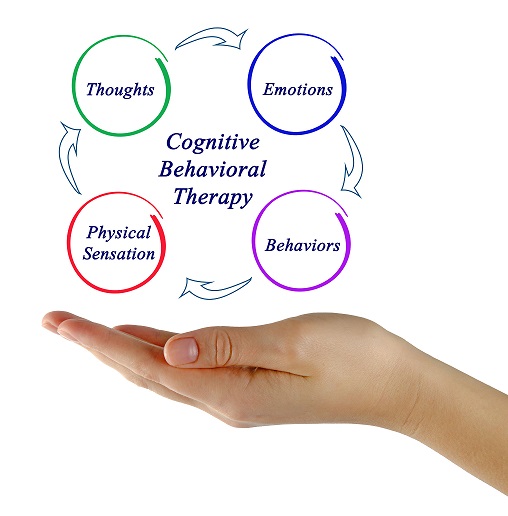
On a daily basis however, emotion management is important. Our frontal cortex can still use extreme fear and anger in out-of-place situations such as in the car, in the office, and parenting as examples; areas where many report feeling overwhelmed, frustrated, and out of control. Cognitive Behavioural Therapy has had a great deal of success in the reframing of negative thought patterns, catastrophizing thoughts, and negative loops.[8] However, if extreme emotionality is present, learning to cope with the intensity of negative emotion is challenging, especially for the remembering of traumatic events[9]. Those healing from trauma can experience flashbacks for many years following the initial event due to the complex nature in which the brain stores memory, and as a result the need for emotional control and support is growing.[4][9]
Currently, emotional regulation is a achieved more individually with a cocktail of coping strategies; reframing negative thought patterns through psychology and psychotherapy, deep breathing, mindful awareness and meditation, positive self-talk, scent therapy or aromatherapy, physical activity (running, yoga, a walk), ecotherapy, and supplement and antidepressant usage. Of these strategies, the effectiveness of each is quite individual.[8][9][10]

Having a strategy for intense emotion before a stressful event arises (or a triggering event) allows for more positive self-control and self-ownership, reducing the intensity of the uncomfortable emotions more rapidly or perhaps the perception of how intense those emotions are actually to the person’s experience.[9]
But what if these intense emotional states are alerting the system to problems and we don’t want to eliminate that knowledge at all? The co-worker that is a narcissistic drama-creator that is affecting your relationship with your superior, or a spouse that is hiding financial spending that is creating strain within the marriage but also threatens the safety of the family. Emotions about these situations or events could be felt earlier than the person may be able to verbally articulate or put together, but more general feelings of unease and anxiety. Exploring carefully within the social environment would be important for things that need to be revealed.[11] Signs of anxiety may be warranted, as could anger as self-protection. Coping strategies are valuable for intense emotional states in general, however, we might be forgetting why emotions are present in the first place; to keep us socially safe, to protect us from harm (in all ways) and to allow us to be successful in our environment.  Not all stressors, even emotional, are negative, even if we perceive them to be. Emotional suppression can lead to less support, more social isolation, and more negative outcomes than actually feeling the discomfort of grief, rage, and fear. [5][11]
Therefore, negative emotions can be seen as a direction to explore further rather than to be afraid of their intensity. What is their message? To what are the emotions alerting? Emotions are untapped in their potential for healing and awareness, and perhaps our fears of emotions need to shift into awe and appreciation.
Références
- Chirinos, D.A., et al. “Depressive symptom profiles, cardio-metabolic risk and inflammation: Results from the MIDUS study.” Psychoneuroendocrinology, Vol. 82 (2017): 17–25.
- Clark, D.A., A.T. Beck, and B.A. Alford. Scientific foundations of cognitive theory and therapy of depression. New York, John Wiley & Sons, 1999, 504 p., ISBN 978-0471189701.
- Dozois, D.J., K.S. Dobson, and J.L. Ahnberg. “A psychometric evaluation of the Beck Depression Inventory—II.” Psychological Assessment, Vol. 10, No. 2 (1998): 83–89.
- Fassbinder, E., et al. “Emotion regulation in schema therapy and dialectical behavior therapy.” Frontiers in Psychology, Vol. 7 (2016): 1373.
- Hammock, E.A.D. “Developmental perspectives on oxytocin and vasopressin.” Neuropsychopharmacology, Vol. 40, No. 1 (2014): 24–42.
- McAllister, S.J., et al. “Perceived dyscognition reported by patients with fibromyalgia.” Clinical and Experimental Rheumatology, Vol. 34, No. 2, Suppl. 96 (2016): S48–S54.
- Cohen, M., S. Granger, and E. Fuller-Thomson. “The association between bereavement and biomarkers of inflammation.” Behavioral Medicine, Vol. 41, No. 2 (2015): 49–59.
- Otani, K., et al. “Relationship of negative and positive core beliefs about the self with dysfunctional attitudes in three aspects of life.” Neuropsychiatric Disease and Treatment, Vol. 13 (2017): 2585–2588.
- Rochet, M., et al. “Depression, olfaction, and quality of life: A mutual relationship.” Brain Sciences, Vol. 8, No. 5 (2018): 80–101.
- Srivastava, S., et al. “The social costs of emotional suppression: A prospective study of the transition to college.” Journal of Personality and Social Psychology, Vol. 96, No. 4 (2009): 883–897.
- Stellar, J.E., et al. “Positive affect and markers of inflammation: Discrete positive emotions predict lower levels of inflammatory cytokines.” Emotion, Vol. 15, No. 2 (2015): 129–133.
- Tomlinson ER et al. Dispositional Mindfulness and Psychological Health: a Systematic Review. Mindfulness (NY) 2018; 9 (1): 23-43.