

The human digestive tract is a dynamic ecosystem made up of a rich and diverse microbiota consisting of bacteria, archaea, viruses, and fungi.1,2,3, Each person has a unique composition of microbiota, and the balance in this symbiotic relationship must be “respected in order to optimally perform metabolic and immune functions and prevent disease development.4 The purpose of this article is to review important definitions and classifications, summarize the functions of specific probiotics focusing on immune and digestive systems, consider quality of supplements, and point out future areas of research.
Definitions

Microorganism: A natural decomposer with an extensive ability to utilize diverse types of organic substances as a source of energy and convert toxic ones into harmless by-products.5
Probiotics: Defined by the World Health Organization as “live microorganisms which, when administered in adequate amounts, confer a health benefit on the host.6
Prebiotics: Nonviable food components that give health benefit to the host associated with microbiota modulation. Basically, food for probiotics, mostly oligosaccharide carbohydrates such as inulin, fructo-oligosaccharides (FOS), and galacto-oligosaccharides (GOS).7
Synbiotics: A synergistic combination of probiotics and prebiotics that beneficially affect the host by improving survival and activity of beneficial organisms in the gut.8,9
Postbiotics: Nonviable bacterial products or metabolic byproducts from probiotic microorganisms that have biological activity in the host.10
Classification
The human digestive tract bacteria fall into two dominant phyla: the Gram-negative Bacteroidetes and the Gram-positive Firmicutes, making up about 90% of the gut microbiota.11,12 Less abundant are Actinobacteria, Proteobacteria, Fusobacteria, and Verrucomicrobia. The Firmicutes include Lactobacillus, Bacillus, Clostridium, Enterococcus, and Ruminococcus. The Bacteroidetes contain the Bacteroides genus, among others, and the Actinobacteria are primarily made up of the Bifidobacterium genus.13 Proteobacteria include many pathogenic bacteria such as E. coli, Shigella, H. pylori, Yersinia, and Legionellalis, but some are nonpathogenic. Bacteroides and Firmicutes produce short-chain fatty acids that feed the colonocytes (colon cells), help reduce inflammation, and fight bacterial infections.
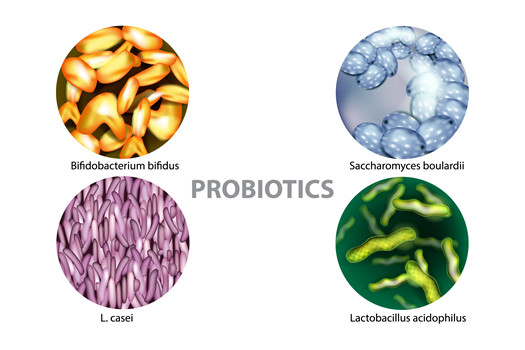
Lactobaccilli are a group of bacteria that produce lactic acid. They protect the mucosal barrier and decrease intestinal permeability. Some Lactobacilli can produce bactericidal hydrogen peroxide, which can prevent pathogen growth.14Bifidobacteria are Gram-positive and produce lactic and acetic acids as byproducts of glucose utilization.15Bacillis coagulans is not a component of the normal human flora. It is used therapeutically like other probiotics, but it is unknown whether it can colonize in the intestinal mucosa. It produces lactic acid and is often misclassified as a lactic-acid bacterium, and some supplements list it wrongly as Lactobacillus sporogenes because it forms spores. These spores may reduce pathogenic bacteria and increase the immune response. It has many advantages of use because it can be stored indefinitely in desiccated form and its spores are resistant to high temperatures and acid.16Saccharomyces boulardii and S. cerevisiae are nonpathogenic yeasts. S. boulardii and S. cerevisiae are similar but show differences in their growth, resistance to temperature, and acidity tolerance.17
Probiotics for Specific Health Conditions Immune Function
For many years, we have understood the relationship between probiotics and immune function. A review of 21 human trials mentions that L. helveticus R0052 and L. rhamnosus R0011 strains adhered to human epithelial cells; helped to maintain the barrier function; produced an anti-inflammatory response (downregulated IL‑1β, IL‑8, and TNF‑α), and blocked pathogens from adhering, enabling their removal from the intestine.18 L. casei Shirota supplementation in endurance athletes was studied. The number of upper respiratory tract infections (URTI) was significantly lower than in the placebo group, but the severity and duration of symptoms were not significantly different.19 Looking at separate strains, a study done on academically stressed undergraduate students showed only B. bifidum supplementation to have significant results in reducing the incidence of cold/flu during the six-week intervention. B. infantis and B. infantis did not show any difference compared with placebo.20 A study on children suggested that a synbiotic consisting of B. infantis R0052, B. infantis R0033, B. bifidum R0071, and FOS can decrease the risk of occurrence of common infectious diseases.21
Looking at research on children with asthma, L. gasseri improved clinical symptoms and immunoregulatory changes in children with asthma and allergic rhinitis.22 L. paracasei and L. fermentum, given separately, both showed lower asthma severity, but when given together, increased peak-expiratory flow rate (PEFR) and decreased IgE levels were observed.23 L. acidophilus NCFM given alone versus a combination with B. animalis ssp. lactis were compared with placebo. Reduction of fever, rhinorrhea, and cough incidence and duration were all improved with probiotics, as well as a decreased need for antibiotics. However, there was an obvious benefit with the strain combination.24 Bifidobacteria mixtures seem to bring added benefits in IgE‑mediated allergies and asthma.25 Many studies involved a three-month trial period; in one study looking at length of probiotic use, children with wheezing rarely suffered from respiratory infections when given a synbiotic for three months containing L. acidophilus, B. infantis, and B. infantis.26 In order to “establish control of the frequency of wheezing,” a longer period of six months was required.27 Research in vitro and in mice showed L. plantarum to significantly alleviate allergic symptoms and reduce levels of IgE.28 Overall, probiotic mixtures seem to show more improvement and have a broader spectrum of action than individually dosed bacteria.

Often concomitant with respiratory conditions, children with atopic eczema/dermatitis syndrome showed substantial clinical improvements and significant decrease in chemokine levels when supplemented with L. sakei.29 Similarly, prebiotic consumption was shown to decrease the severity and risk of development of allergic skin diseases.30In elderly subjects given two strains of L. plantarum (CECT 7315 and 7316), different immune-enhancing effects were shown at high versus low doses. Additionally, these changes remained 12 weeks after probiotic discontinuation.31Another fascinating area of research involves postvaccine immune modulation, where both probiotics and prebiotics have been suggested to be effective in elevating the immune response.32 L. casei was shown to enhance secretory IgA levels, both during infections and when given to children while being vaccinated against rotavirus.33
Rheumatoid Arthritis
Due to the immunomodulating effects of probiotics, they are being studied in autoimmune diseases. In subjects with rheumatoid arthritis (RA), proinflammatory cytokines (TNF, IL‑6, IL‑12) were significantly reduced and a regulatory cytokine (IL‑10) was increased with L. casei supplementation.34 A combination of L. acidophilus, L. casei, and B. bifidum in one study,35 and Bacillus coagulans in another,36 resulted in improvements in activity levels and pain scores, and showed beneficial changes in CRP, serum insulin, and B‑cell function.
Inflammatory Bowel Disease and Irritable Bowel Syndrome
Patients with irritable bowel syndrome (IBS), compared to controls, were found to have a significant decrease in Lactobacillu species, with increases in Proteobacteria and other Firmicutes and decreases in Actinobacteria (Bifidobacteria) and Bacteroides.37 In inflammatory bowel disease (IBD) such as ulcerative colitis (UC) and Crohn’s, there seems to be an overall impairment of short-chain fatty acids (SCFAs), which play an important role in homeostasis of the colon including anti-inflammatory effects and improvement of the propulsive function. 38 Differences in the two diseases show that in UC, there is a decrease in butyrate-producing bacteria, whereas Crohn’s may feature the opposite.39 Probiotics have been shown to lead to remission in UC, although they don’t have any effect on Crohn’s.40 In celiac disease (CD), there is both a decrease in Lactobacillu and Bifidobacteria species, and even though a gluten-free diet can improve symptoms, the dysbiosis may still remain.41 The research with prebiotic supplementation alone is conflicting. Patients with IBS given a high dose of FOS (20 g/d) reported worsening of symptoms.42 Negative results were also seen with 7 g/d of GOS, although improvements were noted at a dose of 3.5 g/d.43 These findings probably related to the variety of types of IBS and IBDs, which are quite different. Overall, there is a loss of microbial richness in both IBS and IBD, and supplementation with a variety of probiotic strains with careful dosing of prebiotics should be considered.

Gastrointestinal Infections
Many bactericidal effects have been seen in vitro and in mice by specific Lactobacillu strains found in the human microbiome. L. rhamnosus GG, L. johnsonii, L. casei, L. reuteri, L. acidophilus LB, and L. casei Shirota all showed bactericidal effects against H. pylori, Shigella, Salmonella, and Campylobacter.44 “L. rhamnosus, L. casei, L. reuteri and heat-treated L. acidophilus LB, were helpful at treating rotavirus and enterovirulent bacteria in children and infants.”45 Treatment of acute watery diarrhea has been reduced in frequency with Saccharomyces boulardii,46 and a variety of probiotics show improvement in antibiotic-associated diarrhea. In a meta-analysis, S. boulardii, L. rhamnosus GG, and probiotic mixtures significantly reduced the development of antibiotic-associated diarrhea, whereas only S. boulardii was effective for Clostridium difficile in some studies.47
Small intestinal bacterial overgrowth (SIBO) can involve an alteration in pH and bowel movements, resulting in a vicious circle. In a study on IBS with and without SIBO, supplementation with S. boulardii, B. lactis, L. acidophilus, and L. plantarum showed a 71.3% decrease in total IBS score in patients with SIBO versus a 10.6% decrease in those without SIBO.48 For prevention of SIBO, probiotics have not been proven effective.49 Findings are somewhat controversial with SIBO, where probiotics may inadvertently colonize the small intestine, although a meta-analysis reported that probiotics significantly increased clearance of SIBO especially alongside antibiotics.50 As expected, a combination of antibiotics and probiotics is probably necessary as well as individualized treatment of SIBO.
Prebiotics
Prebiotics are a convenient food or supplement option resistant to stomach acid, neither degraded by human enzymes nor absorbed through the gastrointestinal tract.51 They are fermented by certain microbiota, which modifies the environment of the gut, decreasing the pH and contributing to changes in composition and population of microbiota.52 There are a variety of prebiotic carbohydrates, but their effect is mostly on the Bifodibacterium genus.53,54 GOS can greatly stimulate Bifidobacteria and Lactobacilli.55 FOS can stimulate lactic-acid bacteria selectively, and the length of fructan is important to determine which bacteria can ferment them. Foods containing prebiotics include onions, leeks, asparagus, chicory, Jerusalem artichoke, garlic, oat, bananas, plantain, wild yam, miso, honey, lentils, chickpeas, lima beans, kidney beans, bamboo, etc.56
Postbiotics
These nonviable bacterial products or metabolic byproducts from microorganisms have similar function to probiotics and include bacteriocins, ethanol, diacetyl, acetaldehydes, and hydrogen peroxide, as well as the important structures from heat-killed bacteria.57
Quality
A variety of encapsulation methods are being used to keep probiotics viable and effective due to the harsh environment of the stomach. A microencapsulation technique used in a study was shown to significantly improve gastric-acid resistance of strains, enhancing probiotic activity and allowing the use of a five-times lower amount.58 L. reuteri seems to tolerate gastric juices well with no significant reduction in viability, whereas L. sakei lost viability in another study.59 Improved adhesion capacity was found in L. plantarum (MF129828 and 299v8), three strains of L. reuteri,60 and L. rhamnosus GG,61 compared to other strains. Another important consideration is temperature in production and storage for viability of probiotics. Storage at 4 °C showed the highest viability compared to those stored at room temperature,62 particularly with the Bifidobacteria , which are heat sensitive.63
Summary
Probiotics show a vast array of use and have multiple functions in our bodies. They are species-specific and strain-specific in terms of their action. Although probiotic strains inhibit each other when incubated, overall, mixtures of probiotics and synbiotics showed greater inhibition of pathogens, and beneficial effects on IBS, IBD, gut function, atopic diseases, immune function, respiratory tract infections, and microbiota modulation.64 Very few species are heat- and acid-resistant, and the best preparations should be refrigerated to ensure viability and enteric-coated for the probiotics to reach the small intestine and colon. During our lifetime, there are many changes to our microbiota, and factors such as diet, stress, antibiotic use, and diseases affect the symbiotic balance. The gut microbiota of each individual can be grouped into three main enterotypes or specifically characterized clusters of bacteria.65 Enterotypes characterize individuals, remain stable in adulthood, and—most importantly—can be modified/restored with probiotic supplementation. The concept of enterotype would be an interesting topic for future research and specific use of probiotics. Typically, “the richer and more diverse the microbiota, the better they will withstand external threats.”66
Références
- Liévin-Le Moal, V., and A.L. Servin. “The front line of enteric host defense against unwelcome intrusion of harmful microorganisms: Mucins, antimicrobial peptides, and microbiota.” Clinical Microbiology Reviews, Vol. 19, No. 2 (2006): 315–337.
- Markowiak, P., and K. Śliżewska. “Effects of probiotics, prebiotics and synbiotics on human health.” Nutrients, Vol. 9, No. 9 (2017): 1021.
- Kerry, R.G., J.K. Patra, S. Gouda, Y. Park, H.‑S. Shin, and G. Das. “Benefaction of probiotics for human health: A review.” Journal of Food and Drug Analysis, Vol. 26, No. 3 (July 2018): 927.
- Rinninella, E., P. Raoul, M. Cintoni, F. Francheschi, G.A.D. Miggiano, A. Gasbarrini, and M.C. Mele. “What is the healthy gut microbiota composition? Changing ecosystem across age, environment, diet, and diseases.” Microorganisms, Vol. 7, No. 1 (2019): 14.
- Rawat, M., and S. Rangarajan. “Omics approaches for elucidating molecular mechanisms of microbial bioremediation.” Chapter 11 (p. 191–203) in: Bhatt, P., ed., Smart Bioremediation Technologies: Microbial Enzymes. London: Academic Press, 2019, 408 p.
- Liévin-Le Moal and Servin. “The front line of enteric host defense.”
- Davani-Davari, D., M. Negahdaripour, I. Karimzadeh, M. Seifan, M. Mohkam, S.J. Masoumi, A. Berenjian, and Y. Ghasemi. “Prebiotics: Definition, types, sources, mechanisms, and clinical applications.” Foods, Vol. 8, No. 3 (2009): 92.
- Markowiak and Slizewska. “Effects of probiotics.”
- Simon, E., L.F. Călinoiu, L. Mitrea, and D.C. Vodnar. “Probiotics, prebiotics, and synbiotics: Implications and beneficial effects against irritable bowel syndrome.” Nutrients, Vol. 13, No. 6 (2021): 2112.
- Kerry et al. “Benefaction of probiotics.”
- Liévin-Le Moal and Servin. “The front line of enteric host defense.”
- Rinninella et al. “What is the healthy gut microbiota composition?”
- Rinninella et al. “What is the healthy gut microbiota composition?”
- Khalighi, A., R. Behdani, and S. Kouhestani. “Probiotics: A comprehensive review of their classification, mode of action and role in human nutrition.” Chapter2 (p. 19–39) in: Rao, V., and L. Rao, eds. Probiotics and Prebiotics in Human Nutrition and Health. Rijeka: Intech, 2016, 392 p.
- Khalighi et al. “Probiotics.”
- Khalighi et al. “Probiotics.”
- Khalighi et al. “Probiotics.”
- Foster, L.M., T.A. Tompkins, and W.J. Dahl. “A comprehensive post-market review of studies on a probiotic product containing Lactobacillus helveticus R0052 and Lactobacillus rhamnosus R0011.” Beneficial Microbes, Vol. 2, No. 4 (2011): 319–334.
- Gleeson, M., N.C. Bishop, M. Oliveira, and P. Tauler. “Daily probiotic’s (Lactobacillus casei Shirota) reduction of infection incidence in athletes.” International Journal of Sport Nutrition and Exercise Metabolism, Vol. 21, No. 1 (2011): 55–64.
- Langkamp‑Henken, B., C.C. Rowe, A.L. Ford, M.C. Christman, C. Nieves Jr, L. Khouri, G.J. Specht, S.‑A. Girard, S.J. Spaiser, and W.J. Dahl. “Bifidobacterium bifidum R0071 results in a greater proportion of healthy days and a lower percentage of academically stressed students reporting a day of cold/flu: A randomised, double-blind, placebo-controlled study.” British Journal of Nutrition, Vol. 113, No. 3 (2015): 426–434.
- Cazzola, M., N. Pham‑Thi, J.‑C. Kerihuel, H. Durand, and S. Bohbot. “Efficacy of a synbiotic supplementation in the prevention of common winter diseases in children: A randomized, double-blind, placebo-controlled pilot study.” Therapeutic Advances in Respiratory Disease, Vol. 4, No. 5 (2010): 271–278.
- Chen, Y.‑S., R.‑L. Jan, Y.‑L. Lin, H.‑H. Chen, and J.‑Y. Wang “Randomized placebo-controlled trial of Lactobacillus on asthmatic children with allergic rhinitis.” Pediatric Pulmonology, Vol. 45, No. 11 (2010): 1111–1120.
- Huang, C.‑F., W.‑C. Chie, and I‑J. Wang. “Efficacy of Lactobacillus administration in school-age children with asthma: A randomized, placebo-controlled trial.” Nutrients, Vol. 10, No. 11 (2018):1678.
- Leyer, G.J., S. Li, M. Mubasher, C. Reifer, and A.C. Ouwehand. “Probiotic effects on cold and influenza-like symptom incidence and duration in children.” Pediatrics, Vol. 124, No. 2 (2009): e172–e179.
- Miraglia Del Giudice, M., C. Indolfi, M. Capasso, N. Maiello, F. Decimo, and G. Ciprandi. “Bifidobacterium mixture (B. longum BB536, B. infantis M‑63, B. breve M‑16V) treatment in children with seasonal allergic rhinitis and intermittent asthma.” Italian Journal of Pediatrics, Vol. 43, No. 1 (2017): 25.
- Stojković, A., A. Simović, Z. Bogdanović, D. Banković, and M. Poskurica. “Clinical trial/experimental study (consort compliant): Optimal time period to achieve the effects on synbiotic-controlled wheezing and respiratory infections in young children.” Serbian Archives of Medicine, Vol. 144, No. 1–2 (2016): 38–45.
- Stojković et al. “Clinical trial/experimental study.”
- Kerry et al. “Benefaction of probiotics.”
- Woo, S.‑I., J.‑Y. Kim, Y.‑J. Lee, N.‑S. Kim, and Y.‑S. Hahn. “Effect of Lactobacillus sakei supplementation in children with atopic eczema-dermatitis syndrome.” Annals of Allergy, Asthma & Immunology, Vol. 104, No. 4 (2010): 343–348.
- Davani-Davari et al. “Prebiotics.”
- Mañé, J., E. Pedrosa, V. Lorén, M.A. Gassull, J. Espadaler, J. Cuñé, S. Audivert, M.A. Bonachera, and E. Cabré. “A mixture of Lactobacillus plantarum CECT 7315 and CECT 7316 enhances systemic immunity in elderly subjects. A dose-response, double-blind, placebo-controlled, randomized pilot trial.” Nutrición Hospitalaria, Vol. 26, No. 1 (2011): 228–235.
- Lei, W.‑T., P.‑C. Shih, S.‑J. Liu, C.‑Y. Lin, and T.‑L. Yeh. “Effect of probiotics and prebiotics on immune response to influenza vaccination in adults: A systematic review and meta-analysis of randomized controlled trials.” Nutrients, Vol. 9, No. 11 (2017): 1175.
- Simon et al. “Probiotics, prebiotics, and synbiotics.”
- Vaghef‑Mehrabany, E., B. Alipour, A. Homayouni‑Rad, S.‑K. Sharif, M. Ashari‑Jafarabadi, and S. Zavvari. “Probiotic supplementation improves inflammatory status in patients with rheumatoid arthritis.” Nutrition, Vol. 30, No. 4 (2014): 430–435.
- Zamani, B., H.R. Golkar, S. Farshbaf, M. Emadi‑Baygi, M. Tajabadi‑Ebrahimi, P. Jafari, R. Akhavan, et al. “Clinical and metabolic response to probiotic supplementation in patients with rheumatoid arthritis: a randomized, double-blind, placebo-controlled trial.” International Journal of Rheumatic Diseases, Vol. 19, No. 9 (2016): 869–879.
- Mandel, D.R., K. Eichas, and J. Holmes. “Bacillus coagulans: A viable adjunct therapy for relieving symptoms of rheumatoid arthritis according to a randomized, controlled trial.” BMC Complementary and Alternative Medicine, Vol. 10 (2010): 1.
- Rinninella et al. “What is the healthy gut microbiota composition?”
- Kerry et al. “Benefaction of probiotics.”
- Rinninella et al. “What is the healthy gut microbiota composition?”
- Markowiak and Slizewska. “Effects of probiotics, prebiotics and synbiotics.”
- Rinninella et al. “What is the healthy gut microbiota composition?”
- Simon et al. “Probiotics, prebiotics, and synbiotics.”
- Simon et al. “Probiotics, prebiotics, and synbiotics.”
- Liévin-Le Moal and Servin. “The front line of enteric host defense.”
- Liévin-Le Moal and Servin. “The front line of enteric host defense.”
- Markowiak and Slizewska. “Effects of probiotics.”
- Markowiak and Slizewska. “Effects of probiotics.”
- Leventogiannis, K., P. Gkolfakis, G. Spithakis, A. Tsatali, A. Pistiki, A. Sioulas, E.J. Giamarellos‑Bourbolis, and K. Triantafyllou. “Effect of a preparation of four probiotics on symptoms of patients with irritable bowel syndrome: Association with intestinal bacterial overgrowth.” Probiotics and Antimicrobial Proteins, Vol. 11, No. 2 (2019): 627–634.
- Zhong, C., C. Qu, B. Wang, S. Liang, and B. Zeng. “Probiotics for preventing and treating small intestinal bacterial overgrowth: A meta-analysis and systematic review of current evidence.” Journal of Clinical Gastroenterology, Vol. 51, No. 4 (Apr 2017): 300–311.
- Rao, S.S.C., and J. Bhagatwala. “Small intestinal bacterial overgrowth: Clinical features and therapeutic management.” Clinical and Translational Gastroenterology, Vol. 10, No. 10 (Oct 2019): e00078.
- Davani-Davari et al. “Prebiotics.”
- Davani-Davari et al. “Prebiotics.”
- Markowiak and Slizewska. “Effects of probiotics.”
- Davani-Davari et al. “Prebiotics.”
- Davani-Davari et al. “Prebiotics.”
- Kerry et al. “Benefaction of probiotics.”
- Kerry et al. “Benefaction of probiotics.”
- Del Piano, M., S. Carmagnola, M. Ballarè, M. Sartori, M. Orsello, M. Balzarini, M. Pagliarulo, et al. “Is microencapsulation the future of probiotic preparations? The increased efficacy of gastro-protected probiotics.” Gut Microbes, Vol. 2, No. 2 (2011): 120–123.
- Jensen, H., S. Grimmer, K. Naterstad, and L. Axelsson. “In vitro testing of commercial and potential probiotic lactic acid bacteria.” International Journal of Food Microbiology, Vol. 153, No. 1–2 (2012): 216–222.
- Jensen et al. “In vitro testing.”
- Khalighi et al. “Probiotics.”
- Astesana, D.M., J.A. Zimmermann, L.S. Frizzo, M.V. Zbrun, J.E. Blajman, A.P. Berisvil, A. Romero‑Scharpen, M.L. Signorini, M.R. Rosmini, and L.P. Soto. “Development and storage studies of high density macrocapsules containing Lactobacillus spp. strains as nutritional supplement in young calves.” Revista Argentina de microbiología, Vol. 50, No. 4 (2018): 398–407.
- Wirjantoro, T., and A. Phianmongkhol. “The viability of lactic acid bacteria and Bifidobacterium bifidum in yoghurt powder during storage.” Chiang Mai University Journal of Natural Sciences, Vol. 8, No. 1 (2009): 95–104.
- Chapman, C.M.C., G.R. Gibson, and I. Rowland. “In vitro evaluation of single and multistrain probiotics: Inter-species inhibition between probiotic strains, and inhibition of pathogens.” Anaerobe, Vol. 18, No.4 (2012): 405–413.
- Rinninella et al. “What is the healthy gut microbiota composition?”
- Rinninella et al. “What is the healthy gut microbiota composition?”