


Continuing where we left off in the first part of this article, we will explore why sun-protection behaviours are central to rosacea management, with an emphasis on sunscreen selection and application considerations. Lastly, we will examine a selection of cosmeceutical active ingredients that are emerging and are often included in adjunctive topical products designed to address one or more aspects of rosacea symptomology. These are often in the form of “antiredness” skincare to reduce the appearance of erythema.
The Role and Importance of Sun Protection
Although sun-protection measures are a key factor in safeguarding against the development of certain skin cancers as well as in slowing its aging process,[1] for patients with rosacea, ultraviolet (UV) protection has its own special consideration. Listed below are notable clinical and pathophysiological connections between UV exposure and rosacea:[2]
- UV radiation represents a common reported trigger of rosacea symptoms
- Lifetime UV-radiation exposure is considered the most important environmental factor relating to rosacea
- UV exposure may induce proangiogenic and proinflammatory effects via the increased expression of vascular endothelial growth factor (VEGF) and the cathelicidin LL‑37
- Chronic exposure to UV‑A can induce dermal collagen degeneration via overexpression of matrix metalloproteinase‑1 (MMP‑1)
- UV‑B exposure can trigger keratinocyte damage leading to the release of cathelicidin LL‑37 and dsRNA, which promote an influx of monocytes and neutrophils in the dermis
- UV radiation triggers cutaneous reactive oxygen species (ROS) generation, which can itself induce the release of proinflammatory cytokines; ROS is not only higher in rosacea-affected skin, but may also enhance the inflammatory response in rosacea patients
What to Look for in Sunscreens in the Context of Rosacea
Sunscreens represent the most common—and likely convenient—means of protecting facial skin against UV rays. The medical literature provides clinicians with several recommendations they can provide to their rosacea patients:
- Use a broad-spectrum sunscreen, as this provides protection from both UV‑A and UV‑B radiation [3]
- Ensure a sun protection factor (SPF) of at least 30 is used [4]
- Look for sunscreens formulated to be less irritating and designed for sensitive skin [5]
- Sunscreens formulated with the moisturizing ingredients of dimethicone or cyclomethicone may be better tolerated and less irritating [6], [7]
As discussed in part 1 of this article, skin barrier–supportive lipids like ceramides are emerging as key aspects of skincare for managing rosacea. Numerous sunscreens are now on the market that incorporate barrier-supportive physiologic lipids like ceramides alongside other common moisturizing agents.
Water-based formulas (e.g., “oil-in-water” type formulas like lotions, “gel creams,” etc.) may be better tolerated than heavier oil-based formulas which can lead to localized heat accumulation and triggering of symptomology.[8], [9]
Although mineral-based sunscreen filters like titanium dioxide and zinc oxide are often recommended owing to their safety profile and tolerability,[10], [11] their exclusive use in this population has been debated.[12] The white cast the mineral filters leave on the skin may be cosmetically unappealing to some patients.[13] Numerous sunscreens on the market formulated for sensitive skin can contain mineral filters, nonmineral (synthetic) filters, and even blends of these two filter categories.
Tinted sunscreens are designed to camouflage facial erythema while providing UV protection; tints are now made for various skin tones.[14], [15] Such products may provide for a positive and immediate impact on patient appearance and confidence, while also helping overcome barriers to sunscreen use in skin of BIPOC patients.[16]
Some sunscreens contain a selection of the cosmeceutical active ingredients, which, as outlined below, may provide skin-calming, anti‑inflammatory, skin-barrier repair, and/or vasoregulatory benefits.
Cosmeceuticals for Rosacea
In their most basic form, cosmeceuticals may be thought of as functional cosmetics—topical products formulated with biologically active ingredients intended to improve skin health and appearance.[17] These active ingredients are often derived from nutrients, phytochemicals, or plant extracts,[18] and can be incorporated into a variety of over-the-counter topical products including moisturizers, serums, cleansers, sunscreens, masks, facial sprays, and even makeup products. In the context of rosacea management, cosmeceuticals are most commonly used for managing facial redness and erythema, as many formulas aim to reduce the underlying skin inflammation that drives chronic, low-grade facial redness.[19] These products may be marketed as “antiredness” or “redness-reducing” skincare. Antioxidant and skin barrier–supportive properties have also been established for certain cosmeceuticals.[20] Even though cosmeceutical active ingredients can be used in a solitary fashion, many are combined in a formula with the goal of providing an enhanced effect owing to their individual contributions. Working with your patients’ dermatologist can help establish what role cosmeceutical-containing products may play as an adjunctive therapy to conventional treatments in mitigating their rosacea symptoms.
Popular and Emerging Cosmeceuticals for Rosacea
1. Niacinamide
How It May Benefit Rosacea
Topical niacinamide has shown evidence for both improving the integrity of the epidermal barrier as well as providing anti-inflammatory activity.[21] More specifically, it has demonstrated barrier support via increased ceramide synthesis in both cell culture and human trials,[22] as well as through the stimulation of keratinocyte differentiation.[23] In exerting its anti-inflammatory effect, niacinamide has been shown to inhibit leukocyte chemotaxis, suppress lysosomal enzyme release, and reduce mast-cell degranulation.[24]
Typical Concentrations Used
Most clinical trials exploring topical niacinamide have used a 2–5% concentration.
Clinical Trial

A study explored the effects of a 2% niacinamide–containing moisturizer on rosacea.[25] This manufacturer-funded, investigator-blinded, randomized, controlled observational trial enrolled 50 women diagnosed with advanced subtype I or II rosacea (persistent erythema, inflammatory lesions, telangiectasias). The study was conducted over four weeks, and the participants had a median age of 45, with Fitzpatrick phototypes I–III. A total of 46 subjects completed the study. Prior to the intervention phase, subjects underwent a two-week washout period during which they applied a facial moisturizer for sensitive skin twice daily. At the start of the four-week treatment phase, participants transitioned to a moisturizer containing 2% niacinamide applied in the morning and evening to the entire face and one forearm, with the other forearm serving as control.
Face and body cleansers for sensitive skin were provided and used consistently throughout the study. Sunscreen use was recommended but not provided.
Notable outcomes at trial end (4 weeks v. baseline) included (p values are provided where they were reported by authors):[26]
- Stratum corneum barrier-function assessments
- Significant reduction in transepidermal water loss (TEWL) measures from treated forearm skin v. untreated skin (p < 0.01)
- TEWL reduction also noted over facial measurements
- Instrumental measures of skin hydration demonstrated a significant increase in skin hydration over forearm (p < 0.01) as well as over facial skin
- Dimethyl sulfoxide chemical probe/challenge results: The mean wheal-and-erythema response over forearms using test product were significantly reduced as compared to untreated forearms
- Investigator-based clinical assessment for rosacea
- Notable reductions found for severity of facial erythema, skin dryness, scaling, peeling, and inflammatory lesions (papule/pustule count), with 79% of subjects showing improvement by week 2 and 95% of subjects by week 4
- No notable effect on telangiectasis
- Subjective assessment of facial skin condition
- Significant improvement noted across various parameters assessed, particularly overall skin appearance, redness or blotchiness, and dryness, flakiness (p < 0.01)
- Treatment moisturizer was well tolerated by all subjects completing the trial
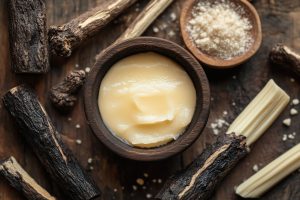
2. Licorice Root Constituents
How It May Benefit Rosacea
Various agents have been isolated and derived from members of the licorice family (including Glycyrrhiza inflata and Glycyrrhiza glabra). Table 1 provides a list of the common active ingredients used in topical formulations. From this, much of the effects centre around a mitigation of the inflammatory state contributing to facial erythema. It’s important to note how some skincare manufacturers will list “licorice extract” as an ingredient: In this context, it may be worth contacting the manufacturer to verify if, and what, constituents are present in their formula.
Typical Concentrations Used
Can vary and is not always reported in research.
Table 1. Licorice family constituents used in skincare [27]
| Licochalcone A |
| Glycyrrhizin and glycyrrhetinic acid |
| Glabridin |
Clinical Trial
Although a portion of the clinical anti-inflammatory data for licorice constituents has been performed on subjects with atopic dermatitis,[28] more research has emerged exploring their use for rosacea and other causes of facial redness. The reader is encouraged to explore other clinical trials.[29], [30], [31] Of note is short 20‑day trial involving 24 subjects diagnosed with either erythematotelangiectatic rosacea or papulopustular rosacea, though the specific distribution between subtypes was not reported.[32] Twelve (12) subjects were provided a cream containing the glycyrrhetinic acid, while 10 served as a control group using a similar cream devoid of glycyrrhetinic acid. The cream was applied twice daily. Evaluations were taken at baseline, and then after 10- and 20‑day marks.
Notable Outcomes [33]
- Corneometric evaluation (evaluating skin hydration)
- Nonsignificant increase in skin hydration at both the 10- and 20‑day timepoints (p > 0.05)
- Erythema index evaluation (instrumental evaluation of facial erythema)
- Significant reduction at the 10‑day timepoint v. baseline (p < 0.05)
- Significant reduction at the 20‑day timepoint v. baseline (p < 0.05) as well as v. 10‑day mark (p < 0.05)
- Patient’s global assessment
- For test group (v. baseline, p value not reported)
- Global improvement of inflammatory lesions and erythema
- Reduction of stinging and burning sensations
- Increased skin hydration
- Product rated as having high cosmetic acceptability
- For test group (v. baseline, p value not reported)
3. Glucosides (glucosylated forms of various plant constituents)
How They May Benefit Rosacea
A newer class of cosmeceutical actives is gaining attention on the market, especially in the context of rosacea. Compounds like rosmarinic acid from rosemary and epigallocatechin gallate from green tea show promise, but their stability within cosmetic formulation has raised concerns. It is believed that by attaching a glucose molecule to their structure, this may impart enhanced water solubility, chemical stability, and bioavailability.[34] This yields a series of cosmeceuticals, often formulated together in antiredness topicals, known as glucosides. Examples include caffeic acid glucoside, gallic acid glucoside, rosmarinic acid glucoside, and epigallocatechin-gallatyl glucoside. These compounds may exert a range of effects including anti-inflammatory, antihistamine, and antiangiogenesis activities.[35]
Typical Concentrations Used
A patented combination of rosmarinic acid glucoside, gallic acid glucoside, and caffeic acid glucoside has been used in a 2% concentration.[36]
Clinical Trial
The team reported on both in vitro and in vivo results for a patented combination product which includes rosmarinic acid glucoside, gallic acid glucoside, and caffeic acid glucoside (RGC active). Our focus will centre around their preliminary clinical trial involving 20 subjects with erythrotelangiectatic rosacea, conducted over 28 days using a split-face, vehicle-controlled design—meaning one side of the face received the serum with 2% RGC, while the other side received the same base formula without the active ingredient. Both were applied twice daily.
Notable outcomes by day 28 (p values not reported by authors) [37]
- Vehicle side: 50% of participants experienced rosacea symptom improvement on active-treated side (especially the reduced appearance of telangiectasias)
- The other 50%: active side showed no worsening of their condition as compared to vehicle side
- Photographic evidence of rosacea skin condition for 4 subjects also demonstrated a reduction in severity by day 28
As the first part of this article highlighted the importance of basic skincare in managing rosacea, and skin-barrier support in particular, our goal for this second part was to examine the importance of daily sun protection and the potential role for erythema-focused topicals. Niacinamide, licorice root constituents, and the emerging evidence for glucoside-based cosmeceuticals offer a snapshot into some of the more popular active ingredients currently on the market. Although more research is needed into the use of cosmeceuticals for rosacea, it is important for the clinician to be aware of their potential role and effects, especially since these agents are found in over-the-counter skincare products directed at rosacea management.
Disclaimer: The information presented in this article is for general information purposes only and does not constitute medical advice. Please first review with your personal health-care practitioner(s) what therapeutic approaches and products would be best for your case.
Références
[1] Young, A.R., J. Claveau, and A.B. Rossi. “Ultraviolet radiation and the skin: Photobiology and sunscreen photoprotection.” Journal of the American Academy of Dermatology, Vol. 76, No. 3, Suppl. 1 (2017): S100–S109.
[2] Morgado‑Carrasco, D., C. Granger, C. Trullas, and J. Piquero‑Casals. “Impact of ultraviolet radiation and exposome on rosacea: Key role of photoprotection in optimizing treatment.” Journal of Cosmetic Dermatology, Vol. 20, No. 11 (2021): 3415–3421.
[3] Baldwin, H., S.M. Habib, Z. Fedorowicz, and D. Randall. “Rosacea.” DynaMed®. https://www.dynamed.com/condition/rosacea. Updated 2025‑01‑24. Accessed 2025‑04‑02.
[4] Baldwin et al, “Rosacea.”
[5] Bikowski, J. “Rosacea regimens.” Chapter 58 (p. 509–516) in: Draelos, Z.D.D. Cosmetic Dermatology: Products and Procedures, 2nd Edition. West Sussex: Wiley Blackwell, 2016, 546 p. + xiv, ISBN 978‑1‑118‑65558‑0.
[6] Baldwin et al, “Rosacea.”
[7] Bikowski, “Rosacea regimens.”
[8] Morgado‑Carrasco et al, “Impact of ultraviolet radiation.”
[9] Kresken, J., U. Kindi, W. Wigger‑Alberti, B.M. Clanner‑Engelshofen, and M. Reinholz. “Dermocosmetics for use in rosacea: Guideline of the Society for Dermopharmacy.” Skin Pharmacology and Physiology, Vol. 31, No. 3 (2018): 147–154.
[10] Baldwin et al, “Rosacea.”
[11] Bikowski, “Rosacea regimens.”
[12] Kresken et al, “Dermocosmetics for use in rosacea.”
[13] Morgado‑Carrasco et al, “Impact of ultraviolet radiation.”
[14] Baldwin et al, “Rosacea.”
[15] Bikowski, “Rosacea regimens.”
[16] Maliyar, K., and S.J. Abdulla. “Dermatology: How to manage rosacea in skin of colour.” Drugs in Context, Vol. 11 (2022): 2021‑11‑1.
[17] Draelos, Z.D.D. “Rosacea and skincare.” Zoe Diana Draelos, MD, https://www.zoedraelos.com/articles/rosacea-and-skin-care/. [No date given.] Accessed 2025‑04‑09.
[18] Clark, A., W.A. Fisk, H.A. Lev‑Tov, and R.K. Sivamani. “The use of cosmeceuticals in rosacea.” Chapter 24 (p. 315–324) in: Sivamani, R.K., J. Jagdeo, P. Elsner, and H.I. Maibach, eds. Cosmeceuticals and Active Cosmetics, 3rd Edition. Boca Raton: CRC Press, 2016, 458 p. + xiii, ISBN 978‑1‑4822‑1417‑8 (eBook/PDF).
[19] Bikowski, “Rosacea regimens.”
[20] Sobkowska, D., A. Szałapska, M. Pawlaczyk, M. Urbańska, I. Micek, K. Wróblewska‑Kończalik, J. Sobkowska, M. Jałowska, and J. Gornowicz‑Porowska. “The role of cosmetology in an effective treatment of rosacea: A narrative review.” Clinical, Cosmetic and Investigational Dermatology, Vol. 16 (2023): 1419–1430.
[21] Kallis, P. J., A. Price, J.R. Dosal, A.J. Nichols, and J. Keri. “A biologically based approach to acne and rosacea.” Journal of Drugs in Dermatology, Vol. 17, No. 6 (2018): 611–617.
[22] Matts, P., J.E. Oblong, and D.L. Bissett. “A review of the range of effects of niacinamide in human skin.” International Federation Societies of Cosmetic Chemists Magazine, Vol. 5, No. 4 (2002): 285–289.
[23] Matts et al, “A review of the range of effects of niacinamide in human skin.”
[24] Clark et al, “The use of cosmeceuticals in rosacea.”
[25] Draelos, Z.D., K. Ertel, and C. Berge. “Niacinamide-containing facial moisturizer improves skin barrier and benefits subjects with rosacea.” Cutis, Vol. 76, No. 2 (2005):135–141.
[26] Draelos, Ertel, and Berge, “Niacinamide-containing facial moisturizer.”
[27] Hoffmann, J., F. Gendrisch, C.M. Schempp, and U. Wölfle. “New herbal biomedicines for the topical treatment of dermatological disorders.” Biomedicines, Vol. 8, No. 2 (2020): 27.
[28] Hoffmann et al, “New herbal biomedicines.”
[29] Weber, T.M., R.I. Ceilley, A. Buerger, L. Kolbe, N.S. Trookman, R.L. Rizer, and A. Schoelermann. “Skin tolerance, efficacy, and quality of life of patients with red facial skin using a skin care regimen containing licochalcone A.” Journal of Cosmetic Dermatology, Vol. 5, No. 3 (2006): 227–232.
[30] Jovanovic, Z., et al. “Efficacy and tolerability of a cosmetic skin care product with trans‑4‑t‑butylcyclohexanol and licochalcone A in subjects with sensitive skin prone to redness and rosacea.” Journal of Drugs in Dermatology, Vol. 16, No. 6 (2017): 605–611.
[31] Dall’Oglio, F., M. Puviani, M. Milani, and G. Micali. “Efficacy and tolerability of a cream containing modified glutathione (GSH‑C4), beta‑glycyrrhetic, and azelaic acids in mild-to-moderate rosacea: A pilot, assessor-blinded, VISIA and ANTERA 3‑D analysis, two-center study (The ‘Rosazel’ Trial).” Journal of Cosmetic Dermatology, Vol. 20, No. 4 (2021): 1197–1203.
[32] Cameli, N., M. Mariano, R. Zanniello, and E. Berardesca. “Clinical and noninvasive instrumental evaluation of the efficacy of a nonsteroidal anti-inflammatory 8‑beta glycyrrhetinic acid cream for the treatment of erythema in rosacea.” Dermatologic Therapy, Vol. 33, No. 6 (2020): e14224.
[33] Cameli et al, “Clinical and noninvasive instrumental evaluation.”
[34] Chajra, H., M. Nadim, D. Auriol, K. Schweikert, and F. Lefevre. “Combination of new multifunctional molecules for erythematotelangiectatic rosacea disorder.” Clinical, Cosmetic and Investigational Dermatology, Vol. 8 (2015): 501–510.
[35] Chajra et al, “Combination of new multifunctional molecules.”
[36] Chajra et al, “Combination of new multifunctional molecules.”
[37] Chajra et al, “Combination of new multifunctional molecules.”