

2017-05-03 11:23:14
2021-01-06 13:50:49
Iron deficiency is the most common nutrient deficiency in the world.[1] Many women are iron-deficient, especially those who are menstruating, pregnant, postpartum, or breast-feeding. Iron deficiency is also commonly seen in those with chronic blood loss and/or gastrointestinal absorption issues. Untreated iron deficiency can lead to iron-deficiency anemia, which occurs when the body lacks sufficient amounts of iron to form normal red blood cells. Without enough iron, the body can’t produce enough hemoglobin for red blood cells to deliver oxygen from the lungs to the tissues.

These are some of the symptoms that one may experience with iron deficiency or anemia:[2]
Iron Is Vital for Many Processes in the Body
In addition to delivering oxygen to the tissues, iron has many other important roles in the body. It is one of the most important nutrients for immune function, as it maintains white blood cell levels, and for antibody production, and thus fights off infections. This might contribute to getting recurring colds/flus. Iron is also required for the production of amino acids, hormones, and neurotransmitters, which might explain lower concentration levels or lower thyroid function, as iron is an integral part of the enzyme reaction that produces neurotransmitters and thyroid hormones.[3]
Causes and Diagnosis of Iron Deficiency

Iron deficiency is most commonly caused by:[2]
- Chronic bleeding (e.g. excessive menstrual bleeding, gastrointestinal bleeding) or blood donation
- Inadequate intake from the diet (vegetarians and vegans are more prone to iron deficiency)
- Malabsorption syndromes (such as celiac disease, low stomach acid, bacterial overgrowth), inflammatory bowel syndromes or diseases
- Use of NSAIDs (nonsteroidal anti-inflammatory drugs such as aspirin or ibuprofen)
- Athletic lifestyle
Iron Studies
Diagnostics for iron-deficiency anemia consist of low hemoglobin, low serum iron, low serum ferritin (the storage form of iron), low transferrin saturation, and high total iron-binding capacity. It is important to note that ferritin level may be misleading, especially if there is acute or chronic inflammation, as ferritin is an acute phase reactant and increases in the presence of an inflammatory process.[1]
Treating Iron Deficiency
Treatment of iron deficiency should be targeted towards the cause of the deficiency. For example, a study by Rockey et al demonstrated that 60% of adult patients with iron-deficiency anemia may have an underlying gastrointestinal disorder (e.g. low stomach acid or excess inflammation), which needs to be investigated and treated, and similarly for women with heavy menstrual bleeding.[4] 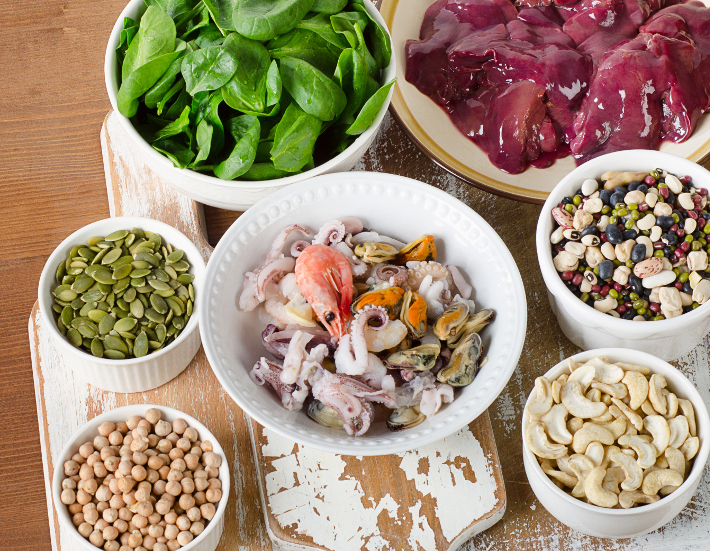
Once the cause has been established and treatment is under way, iron-deficiency anemia is usually reversible with iron repletion, which usually includes the use of iron supplements and food sources of iron (see chart below). Iron status should be assessed before starting iron supplementation, as iron overload may increase the incidence of cardiovascular disease and other chronic illnesses as well as cause harm to people who carry the iron-overload gene.[1]
Food Sources
There are two types of dietary iron: heme iron (animal-based) and nonheme (plant-based) iron. The heme form has been demonstrated to have a high bioavailability than the nonheme form.[1] In addition, the acidic environment of the stomach and certain foods are known to increase the bioavailability of dietary iron.[2] The guideline for recommended iron intake is 18 g for women aged 19–50.[6]
Heme Iron Sources
| Food | Serving Size | Iron | % Guideline |
|---|---|---|---|
| Clam | 100 g | 28 mg | 155% |
| Pork Liver | 100 g | 18 mg | 100% |
| Lamb Kidney | 100 g | 12 mg | 69% |
| Cooked Oyster | 100 g | 12 mg | 67% |
| Cuttlefish | 100 g | 11 mg | 60% |
| Lamb Liver | 100 g | 10 mg | 57% |
| Octopus | 100 g | 9.5 mg | 53% |
| Mussel | 100 g | 6.7 mg | 37% |
| Beef Liver | 100 g | 6.5 mg | 36% |
| Beef Heart | 100 g | 6.4 mg | 35% |
Non Heme Iron Sources
| Food | Serving Size | Iron | % Guideline |
|---|---|---|---|
| Soybeans | 250 ml | 9.3 mg | 52% |
| Raw Yellow Beans | 100 g | 7 mg | 39% |
| Lentils | 250 ml | 7 mg | 39% |
| Falafel | 140 g | 4.8 mg | 27% |
| Soybean Kernels | 250 ml | 4.7 mg | 26% |
| Toasted Sesame Seeds | 30 g | 4.4 mg | 25% |
| Spirulina | 15 g | 4.3 mg | 24% |
| Candied Ginger Root | 30 g | 3.4 mg | 19% |
| Spinach | 85 g | 3 mg | 17% |
Iron Supplements
Iron is available in many dietary supplements, and there is quite a bit of variation among them with respect to dose, absorption, and effects on the gastrointestinal system. There are forms of iron supplements that have better bioavailability than others; for example, ferrous iron is more bioavailable than ferric iron. Also, other forms such as heme iron or polysaccharide-iron complexes may have fewer gastrointestinal side effects (e.g. constipation, nausea).
Important Tips for Taking Iron
- Iron absorption (especially the nonheme form) is enhanced by taking vitamin C with the iron source
- Absorption is reduced by consuming foods rich in tannins—such as coffee or black tea—around the same time as the iron source
- Iron supplements may be more effective when taken at a separate time of day from supplements containing vitamin E, calcium, magnesium, or zinc, or medications such as antacids, as iron absorption is reliant on stomach acid which is depleted by these drugs [1]
Références
- Johnson-Wimbley, T.D., and D.Y. Graham. “Diagnosis and management of iron deficiency anemia in the 21st century.” Therapeutic Advances in Gastroenterology. Vol. 4, No. 3 (2011): 177–184.
- Bermejo, F., and S. García-López. “A guide to diagnosis of iron deficiency and iron deficiency anemia in digestive diseases.” World Journal of Gastroenterology. Vol. 15, No. 37 (2009): 4638–4643.
- Ganz, T. “Hepcidin, a key regulator of iron metabolism and mediator of anemia of inflammation.” Blood. Vol. 102, No. 3 (2003): 783–788.
- Rockey, D.C., and J.P. Cello. “Evaluation of the gastrointestinal tract in patients with iron-deficiency anemia.” The New England Journal of Medicine. Vol. 329, No. 23 (1993): 1691–1695.
- Zhang, A.S., and C.A. Enns. “Molecular mechanisms of normal iron homeostasis.” Hematology. American Society of Hematology. Education Program. Vol. 2009, No. 1 (2009): 207–214.
- National Academy of Sciences. Institute of Medicine. Food and Nutrition Board. Dietary Reference Intakes: Recommended Intakes for Individuals.